





The smartphone war is no longer about camera pixels or battery size; the new battleground is artificial intelligence. But 'AI' is more than a marketing buzzword. Each major player—Apple, Google, and Samsung—has a unique and telling philosophy.
Apple Intelligence: The Private Butler
Apple's
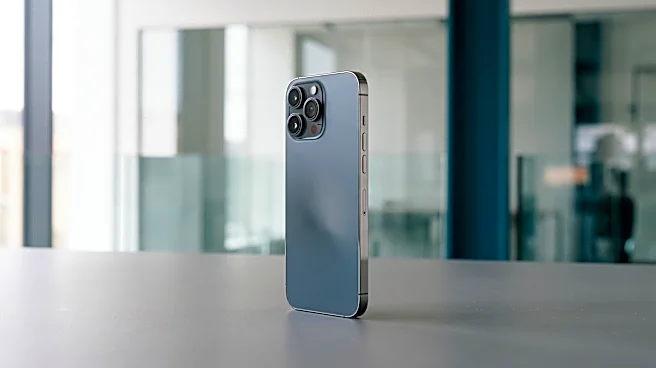
approach to AI, dubbed 'Apple Intelligence,' is built on a foundation of privacy and seamless integration. The core principle is to process as much data as possible directly on the device using its powerful A-series chips. This means tasks like summarizing your emails, creating custom 'Genmoji,' or using writing tools to adjust your tone happen securely on your phone, without your personal data being sent to the cloud. For more complex requests that need more power, Apple uses a system called 'Private Cloud Compute,' which is designed to handle tasks without storing user data. The experience feels less like a flashy chatbot and more like a discreet, helpful assistant that understands your personal context—what’s on your screen, which apps you're using, and your daily schedule—to provide genuinely useful help, like prioritizing notifications or finding information across apps. It’s the AI for users who value privacy and a system that works seamlessly across their iPhone, iPad, and Mac.
Google's Pixel: The All-Knowing Teammate
If Apple’s AI is a private butler, Google’s is an all-knowing teammate that anticipates your next move. The Pixel lineup, now featuring the Pixel 11, is the purest expression of Google's AI-first vision, powered by its custom Tensor chips and Gemini models. Google leverages its dominance in search and cloud computing to offer proactive and deeply integrated features. For example, Gemini Intelligence can handle tasks like booking reservations or proactively suggesting flight information it found in your email when a friend messages you about a trip. The Pixel's camera has long been a showcase for computational photography, and features like Magic Capture, which automatically takes photos from a video, and an incredible 120x 'Pro Zoom' continue that legacy. The standout is how deeply Gemini is woven into the operating system, offering a more conversational and context-aware assistant than its rivals. It's the best choice for users who live in Google's ecosystem and want an AI that feels omnipresent and powerfully helpful.
Samsung's Galaxy AI: The Feature-Packed Powerhouse
Samsung's strategy with 'Galaxy AI' is to give you a massive, versatile toolkit. While it partners with Google for some features like 'Circle to Search,' Samsung has also built a wide array of its own AI tools, making its Galaxy S series phones feel packed with capabilities. Standout features include Live Translate for real-time translation during phone calls and an Interpreter mode for face-to-face conversations. Its Generative Edit for photos is among the most powerful, allowing users to move and resize objects within an image, though it does add a watermark. Samsung offers a kitchen-sink approach, integrating AI into nearly every corner of its One UI software, from note-taking and browsing to its camera. Uniquely, Samsung provides a toggle that forces all AI processing to happen on-device for users concerned about privacy. This makes the Galaxy the phone for the power user who wants the maximum number of AI tools at their disposal.
Head_to_Head:_ Where They Actually Differ
When you put them side by side, the practical differences become clear. For photography, Google's Pixel still leads in computational smarts with features like Photo Unblur and Best Take, which ensures everyone in a group photo looks their best. Samsung offers the most creative editing tools, while Apple focuses on clean, natural looking results. In productivity, Apple's system wide Writing Tools for proofreading and changing tone are considered best in class. Google's Pixel excels at summaries and its iconic Call Screen feature for filtering spam remains an exclusive superpower. Samsung’s Note Assist offers robust summaries and formatting for those who rely on the S Pen. For real time translation, all three are now competitive, but Samsung's on device call translation is a major differentiator. When it comes to the core assistant, Google's Gemini is the most knowledgeable and conversational, capable of complex, multi step tasks that Siri and Samsung’s Bixby are still catching up to.