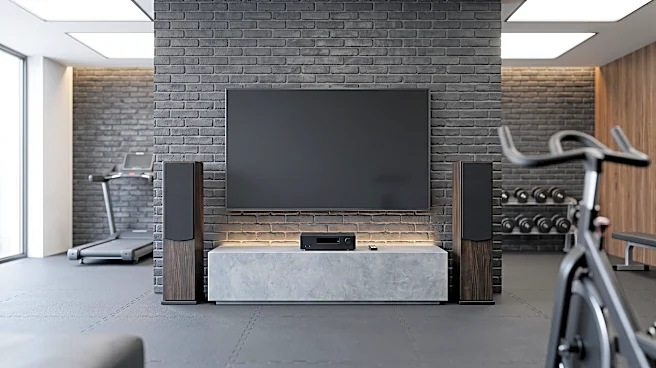









The Real Threat: Your Basement’s Climate
When you’re shopping for a TV or speaker system for your new home gym, it’s easy to get caught up in screen size, refresh rates, and audio wattage. You read reviews, compare specs, and find the perfect model. But those reviews are almost always written
from the perspective of a climate-controlled living room. A basement—especially one where you’re working up a sweat—is a completely different world. It’s typically damper, dustier, and subject to greater temperature swings than the rest of your house. These environmental factors, not the brand name or feature list, are often the biggest threat to your new gear's longevity. Before you spend a dime, you need to think less like a tech reviewer and more like a building inspector.
Humidity: The Silent Killer of Circuits
The number one enemy of electronics in a basement is humidity. Basements are naturally prone to dampness, and intense workouts only add more moisture to the air. For electronics, any relative humidity level above 50-60% starts to become a problem. High humidity can lead to condensation forming on and inside your devices as warm, moist air hits cooler electronic components. This moisture can cause a cascade of issues, from corroding metal parts and circuit boards to creating unintended electrical pathways that lead to short circuits. Over time, this slow, silent damage can lead to distorted audio, screen glitches, or complete device failure, long before you’d expect it.
Don’t Forget Dust and Debris
Your workout itself creates another hidden enemy: dust. This isn't just the normal household dust you see on a bookshelf. Home gyms can produce fine particles of chalk, rubber from flooring or equipment, and even concrete dust from the foundation. This debris gets pulled into the ventilation fans of your TV and audio receiver. As it accumulates, it acts like an insulating blanket, trapping heat and preventing the components from cooling properly. This can lead to overheating, which reduces performance and significantly shortens the lifespan of your electronics. Dust can also clog speaker grills, muffling sound, and interfere with sensitive connection points for HDMI and power cables.
Strategic Defense: Control the Environment
Instead of searching for a mythical waterproof, dust-proof TV, the smarter strategy is to control the environment around it. The single most important investment you can make is a good dehumidifier. Aim to keep the basement's relative humidity between 40% and 50%, an ideal range for both human comfort and electronic health. You can monitor this with a simple, inexpensive hygrometer. Next, consider air quality. An air purifier with a HEPA filter can capture the fine dust and particles your workout kicks up before they have a chance to settle in your electronics. Finally, ensure proper ventilation in the room to help dissipate both moisture and heat.
Smarter Placement and Simple Maintenance
Where and how you install your equipment also matters. Keep electronics off the floor and away from direct contact with cold concrete walls, which can attract condensation. When mounting a TV, ensure there's enough space behind it for air to circulate freely. Use a surge protector to guard against power fluctuations, which can be more common in older homes or on circuits shared with heavy-duty exercise equipment like treadmills. A little maintenance goes a long way. Once a month, power everything down and use a can of compressed air and a microfiber cloth to gently clean vents, ports, and surfaces. This simple routine can prevent the slow buildup that leads to premature failure.