




The Gold Rush and Its Shovel-Seller
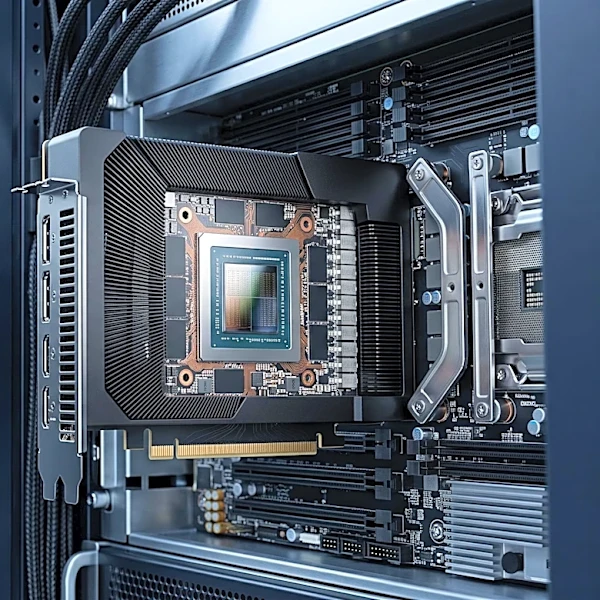
To understand the AI boom, you have to understand Nvidia. The company is at the epicenter of the AI gold rush, not as a prospector, but as the exclusive seller of picks and shovels. Its highly specialized graphics processing units (GPUs) are the foundational
hardware required to build and run today's powerful AI models. In its most recent quarter, Nvidia reported revenues of $115.8 billion, a stunning 103% increase from the prior year. The driver was its Data Center business, which alone accounted for $107.6 billion, up 110% year-over-year. Companies from tech giants like Microsoft and Google to startups and governments are buying Nvidia's chips as fast as they can be made, creating a massive backlog and cementing Nvidia's role as the primary arms dealer in the race for AI dominance.
The Staggering Price Tag
The cost to get in the game is astronomical. A single top-tier Nvidia H100 GPU can cost between $25,000 and $40,000. But AI requires these chips at a massive scale. A server system with eight of these GPUs can run upwards of $300,000. This translates into jaw-dropping capital expenditures for the companies building out AI infrastructure. Microsoft, for instance, expects to spend about $175 billion in 2026, while Meta and Amazon are also investing hundreds of billions. For Nvidia itself, the demand requires massive outlays; its supply and capacity commitments surged to $390 billion to secure the components needed to build its advanced chips. While cloud rental offers an alternative to buying, leasing a cluster of high-end GPUs can still run into the millions per month.
The Hidden Costs: Power and Planet
Beyond the financial outlay are significant environmental costs. The data centers needed to power AI are immense consumers of energy and water. A recent study in Nature Sustainability found that U.S. hyperscale data centers, largely driven by AI, can use as much electricity as entire states like Michigan or Tennessee and are mostly powered by fossil fuels. Global data center electricity demand is projected to roughly double by 2030, with AI workloads driving most of that growth. This voracious energy use comes with a massive water footprint for cooling the overheated hardware. One widely used AI service is estimated to consume hundreds of gigawatt-hours of electricity each year, while generating a single AI image can use over a thousand times the energy of a simple text classification. These environmental burdens are often concentrated in the communities hosting the data centers, even as the benefits of AI are distributed globally.
Is the ROI Real? The Search for Value
The core question for the businesses spending these fortunes is whether the investment is paying off. The answer, for now, is mixed. While global AI spending hit an estimated $2.59 trillion in 2026, many companies are struggling to see a clear return. A 2026 McKinsey report found that while 80% of companies see improved productivity from AI, only 37% attribute any impact on their earnings to it, a figure that has barely budged in a year. Another study found that only 23% of companies report significant ROI on their AI investments. However, the picture is improving. A Boston Consulting Group study found that nearly half of companies are now capturing meaningful value from AI, challenging the narrative that it isn't paying off. For the top-performing 20% of companies, AI is a major driver of growth, not just cost-cutting. The cloud providers themselves are seeing a payoff, with providers like Google Cloud and Microsoft Azure reporting surging revenue growth driven by AI services. This suggests that while a clear, broad-based ROI remains elusive for many, the leaders are pulling away, turning massive costs into tangible business value.