






That 'Simple' Dish Is an Orchestral Conductor
The dish you set up, sometimes called a user terminal, isn't just a passive receiver. It contains a sophisticated phased-array antenna. Instead of physically moving to track a satellite, it electronically steers its beam, maintaining a connection with
a satellite traveling at over 17,000 miles per hour. That satellite is only in view for a few minutes, so the dish must seamlessly hand off your connection from one satellite to the next without you ever noticing. It’s conducting a high-speed, orbital orchestra just to let you stream a movie.
The Internet Isn't Actually in Space
A common misconception is that satellite constellations are a self-contained internet in the sky. They're not. They are a bridge. Your data travels from your dish to a satellite, which then beams it down to a ground station. These ground stations are anonymous-looking data centers packed with antennas, physically connected to the world's internet backbone via high-speed fiber optic cables. So, when you're accessing a website, your request goes up to space, down to a ground station, out to the regular internet, and then the entire path in reverse. Services like Starlink need a massive, globe-spanning network of these stations to make the system work. Some newer satellites use inter-satellite laser links to reduce this dependency, but ground stations remain a critical, and complex, piece of the puzzle.
The Tyranny of Low Latency
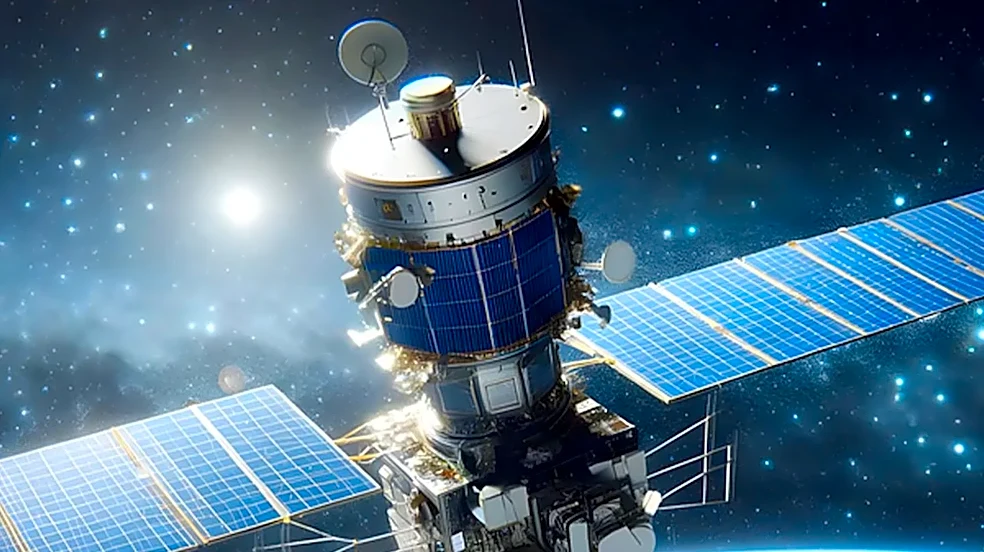
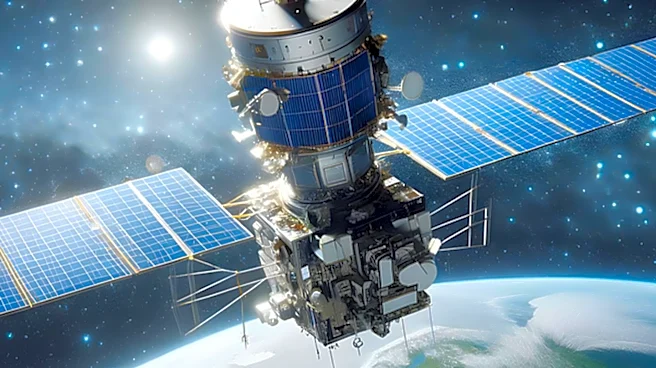
The reason modern satellite internet feels so much better than its predecessors is its low orbit. Companies like Starlink and Kuiper place their satellites in Low Earth Orbit (LEO), around 550 kilometers up. Traditional geostationary (GEO) satellites orbit at a staggering 35,786 kilometers. That vast distance is the killer, creating a lag, or latency, of 600-700 milliseconds due to the sheer travel time of the signal, even at the speed of light. LEO constellations cut that latency down to just 25-60 milliseconds, making video calls and gaming possible. But the trade-off is immense: at that low altitude, you need thousands of satellites to provide continuous coverage, as each one zips across the sky in minutes. A single GEO satellite can cover a whole continent; a LEO system needs a swarm.
The Economics Are Astronomical
Running a LEO constellation is one of the most capital-intensive business models imaginable. First, you have to design and mass-produce thousands of satellites. Then you have to launch them, which, unless you own the rocket company like SpaceX does, means paying billions to others. Amazon, for instance, has contracted launches from multiple providers for its Kuiper system. But it doesn't stop there. LEO satellites have short lifespans of around five years. This means the company must constantly launch new satellites just to replace the ones falling out of orbit, a massive, recurring operational cost. Proving the commercial viability of this model, as Starlink has begun to do with reported revenues of $11.4 billion in its connectivity segment for 2025, requires achieving immense scale and continuously driving down manufacturing and launch costs.
A Crowded and Dangerous Sky
The final, and perhaps scariest, complication is space debris. With tens of thousands of satellites planned for orbit, the risk of collisions increases dramatically. A single collision could create a cloud of shrapnel, threatening every other satellite in that orbital shell. This has led to fears of the 'Kessler Syndrome,' a runaway chain reaction of collisions that could render LEO unusable for generations. Even without collisions, defunct satellites must be safely de-orbited, a process that carries its own risks. Companies must navigate a complex and evolving set of international regulations while actively maneuvering their satellites to dodge thousands of potential impacts. It's a problem of a shared resource—the sky itself—where one operator's mistake can have catastrophic consequences for everyone.