







The Billion-Dollar Blip on the Radar
Wall Street isn't holding its breath over Meta's ability to sell ads; analysts expect another blockbuster quarter with revenue topping $60 billion. The real drama lies in a different line item: capital expenditures, or CapEx. This is the money Meta spends
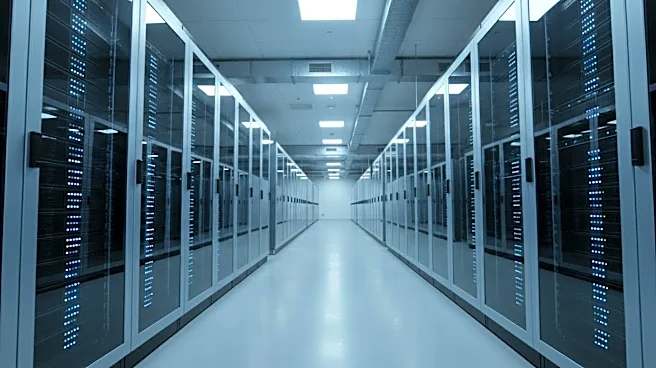
on physical infrastructure—gleaming data centers and, most importantly, tens of thousands of power-hungry, high-priced AI chips. For 2026, Meta has guided investors to expect a CapEx bill between $125 billion and $145 billion. That figure, nearly double last year's spending, is what has investors on edge. It represents a massive, company-altering bet that building its own powerful AI is the only way to compete in the next decade of technology, even if the returns are years away.
An Arms Race Measured in Gigawatts
This isn't just a Meta story; it's the story of the entire tech industry in 2026. The race to build artificial general intelligence (AGI) has become a high-stakes arms race where ammunition is measured in computing power. Training a frontier model like Google's Gemini Ultra is estimated to cost nearly $200 million in compute resources alone. But that's just the start. Running these models to answer user queries—a process called inference—creates an ongoing, astronomical electricity bill. This is the fundamental tension Wall Street is grappling with: the costs are immense and immediate, while the profits are speculative and distant. Meta's earnings call is a crucial stress test for this new economic reality.
The 'Free' AI Illusion
For users, AI models like Meta's Llama often feel like magic, a free and powerful tool available at their fingertips. But in business, nothing is truly free. Meta's strategy mirrors its classic social media playbook: build a massive user base with a free product, then monetize the engagement. By open-sourcing its Llama models, Meta encourages widespread adoption, letting a global community of developers improve the product for them. The direct payoff isn't charging for Llama itself; it's about making Meta's own products—from Instagram's content feed to AI-powered ad tools—so effective that they become indispensable, thus driving its core advertising revenue higher. Early results suggest this is working, with AI-driven ad performance showing strong gains.
The Search for a Payday
Still, a $145 billion annual spending habit can't be sustained by indirect ad-revenue boosts alone. Sooner or later, the investment needs to generate its own profit. This is the question CEO Mark Zuckerberg will be pressed to answer. The path to monetization is uncertain and multi-pronged. One possibility involves turning its massive infrastructure into a cloud computing business, selling excess AI capacity to other companies, much like Amazon did with AWS. Rumors of a potential partnership to provide computing power for AI company Anthropic suggest this may be more than just an idea. Other paths include enterprise licensing for premium versions of its models or integrating AI so deeply into future hardware, like AR glasses, that it becomes a must-have feature people will pay for.