







In the world of Big Tech, giants cast long shadows, and the companies that grow within them often go unseen. This is the story of one such partner, whose foundational work helped build Google's AI empire, only to be cast aside.
The Partner Behind the AI Throne
For years, the Australian
company Appen was one of the most important companies you’d never heard of. It provided the secret sauce for much of modern artificial intelligence: human-labeled data. Appen employed a global network of over a million contractors who performed the painstaking work of 'teaching' AI. They would label images, transcribe audio, and evaluate search results, essentially telling Google’s algorithms what they were seeing and hearing. This process, known as data annotation, was fundamental to training Google's AI models, including those powering its search engine, Google Assistant, and its generative AI, Gemini (formerly Bard). In 2023 alone, this work was worth $82.8 million to Appen, representing roughly a third of its total revenue. It was a classic 'picks and shovels' business in the AI gold rush, and for a long time, business was booming.
A Sudden and Unexpected Breakup
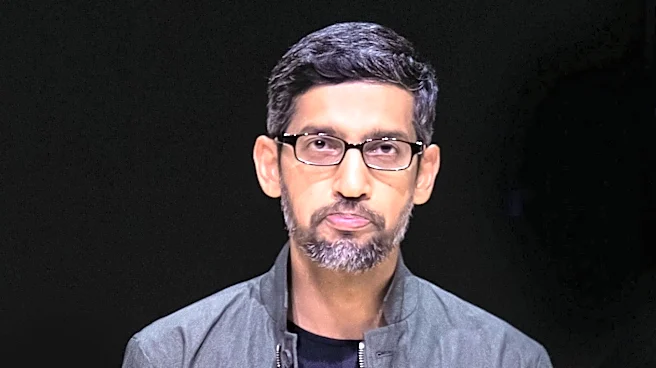
The partnership came to an abrupt end in January 2024. Google notified Appen that it was terminating their global services contract, with all projects to cease by March 19, 2024. Appen's board described the decision as 'unexpected and disappointing,' stating they had no prior warning. In a statement, Google explained the move was part of an ongoing effort to evaluate and adjust supplier partnerships to improve operational efficiency. But the context told a deeper story. The termination came amid a wave of layoffs at Google, as CEO Sundar Pichai signaled a company-wide push to reallocate resources toward its biggest AI priorities. The message, both internally and to the market, was clear: Google was streamlining and bringing more critical functions in-house. The days of relying on outside firms for core AI development work were numbered.
The Crushing Fallout
For Appen, the news was catastrophic. The company's stock price plummeted over 40% immediately following the announcement, wiping out a huge portion of its market value. Having already seen its stock slide from a peak of over $42 in 2021, this was a devastating blow. The loss of its biggest client, which accounted for such a massive slice of its income, triggered an existential crisis. In the months that followed, Appen's CEO departed, other key executives resigned, and the company was forced into painful cost-cutting measures, including closing North American offices. It was a brutal lesson in the risks of dependency. Appen had other high-profile clients like Meta and Microsoft, but the scale of its relationship with Google made the loss impossible to absorb without massive consequences.
Google's Endgame: Owning the Entire AI Factory
Google's decision wasn't just about cutting costs; it was a strategic pivot reflecting the maturation of the AI industry. In the early days, tech giants needed huge armies of human labelers like those from Appen to generate the training data to build their models from scratch. Now, the game has changed. AI models have become sophisticated enough to generate their own 'synthetic' training data, and the process of refining them (known as Reinforcement Learning from Human Feedback or RLHF) is becoming more automated. By ending its reliance on Appen, Google is moving to vertically integrate its AI supply chain. This gives the company greater control over quality, speed, and, most importantly, cost. It’s a classic move for a mature tech behemoth: what was once outsourced is now being internalized as a core competency. This shift signals a new era where the foundational grunt work of AI is being industrialized, leaving the original 'picks and shovels' suppliers out in the cold.