









The 'Next Platform Shift' Gamble
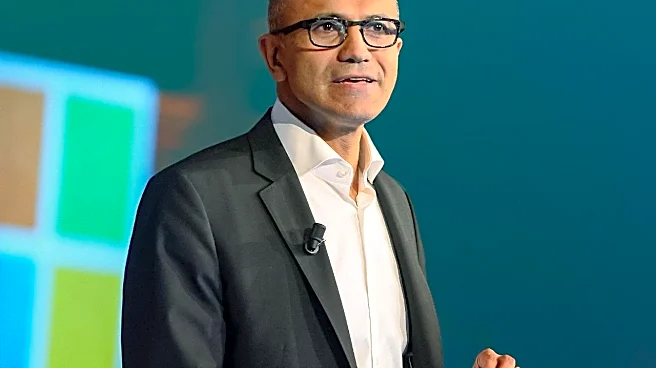
For CEO Satya Nadella, Copilot isn't just another feature; it's a fundamental 'platform shift' akin to the internet or the smartphone. The company has poured billions into its partnership with OpenAI and into building a massive global network of data
centers to power this new age of computing. The strategy is to embed AI assistants across its entire product ecosystem—from Windows and Office to its Azure cloud and developer tools. Nadella has framed this as moving beyond simple AI models to creating integrated systems that augment human productivity, positioning Copilot as a 'bicycle for the mind'. The goal is to make Microsoft the essential control layer for AI in the business world, a bet underscored by massive capital expenditures guided to exceed $50 billion in a single quarter.
The Thirty-Dollar Question
The most direct test of this strategy is the price tag. Microsoft is asking enterprise customers to pay an additional fee, often cited around $30 per user per month, for its most capable Microsoft 365 Copilot. The key question for businesses is whether the productivity gains justify the significant new cost. Early adoption numbers are a major focus for Wall Street. As of its last major update in July 2026, Microsoft reported that paid Copilot seats had surpassed 30 million, with the number of customers making large-scale deployments growing rapidly. Analysts are now keenly watching whether this momentum can be sustained as the product moves from early adopters to the broader market, with some projecting Copilot could add significant percentage points to Microsoft 365 growth.
Reading the Revenue Tea Leaves
With Microsoft's next quarterly earnings report scheduled for October 28, all eyes are on the numbers that will prove or disprove the thesis. Investors are looking past headline revenue and focusing on specific metrics: Azure's growth rate, which is a proxy for AI infrastructure demand, and any specific figures or commentary on Copilot's direct revenue contribution. Analysts expect overall revenue around $90 billion for the quarter, but the narrative will be shaped by the performance of the cloud and AI segments. The company's massive capital spending has put pressure on free cash flow, making it critical for Microsoft to demonstrate that these investments are translating into profitable growth.
The Enterprise Gauntlet
Beyond the financial hurdles, rolling out generative AI across large organizations presents a gauntlet of practical challenges. Data quality and security are paramount. Many enterprises struggle with siloed or messy internal data, which can limit an AI's effectiveness or lead to unreliable outputs. Concerns about data privacy, compliance, and the risk of AI 'hallucinations'—where the model generates plausible but incorrect information—are major barriers for corporations in regulated industries. Some analysts believe these very concerns could play to Microsoft's advantage, positioning the company as a trusted, secure partner for AI governance, a sort of 'adult in the room' for enterprise AI.
More Than a Word Processor
While much of the public focus is on Copilot in Word and Excel, the strategy's success depends on its integration across the entire Microsoft stack. GitHub Copilot, aimed at software developers, has seen strong adoption with a clear monetization model. Microsoft is also pushing Copilot into its Dynamics 365 business applications and creating an overarching 'Agent 365' platform to let companies manage and deploy AI agents like they manage employees. This broad-based approach is designed to create a powerful ecosystem effect, where the value of each product is enhanced by its AI capabilities, making the entire platform stickier and harder for competitors to displace.