






6. Hands-Free Camera & Video Capture
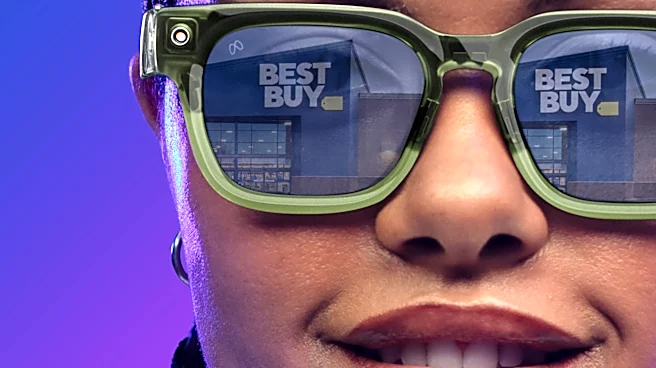
Let’s start with the feature that broke smart glasses into the mainstream: the built-in camera. Popularized by the Ray-Ban Meta series, the ability to snap a photo or record a short video from your first-person perspective is undeniably cool. It's perfect
for capturing fleeting moments with kids, recording a snippet of a concert without holding up a phone, or documenting a bike ride. Its real-world usefulness, however, is situational. While great for content creators and parents, the social awkwardness of a forward-facing camera and legitimate privacy concerns keep it from being an all-day, everyday necessity for most people. It's a fantastic party trick that has its moments of brilliance, but it's not the feature you'll rely on from morning to night.
5. On-Demand AI Assistant
Imagine looking at a landmark and asking your glasses, "What building is that?" and getting an instant audio answer. That's the promise of integrated AI assistants, a core feature in models like the Ray-Ban Meta Gen 2. These assistants can identify objects, answer general questions, and even help with language translation, all without you pulling out your phone. The utility here is high, especially for travelers or the habitually curious. It turns the world into a searchable database. The main limitation is that it's still largely an audio-first experience on many popular models. Until the visual-search capabilities become more seamlessly integrated with in-lens displays, it remains a powerful but slightly disjointed tool—more like an advanced headphone feature than a true augmented reality experience.
4. Discreet, Heads-Up Notifications
This is the 'boring' feature that might be the most profound. Smart glasses from companies like Even Realities are leaning into subtlety, offering simple, text-based notifications that appear in your peripheral vision. Think of it as a smartwatch display you can see without moving your wrist. You get turn-by-turn directions without looking down at a map, see incoming text messages, or get calendar alerts—all while keeping your eyes on the world around you. This is where smart glasses begin to feel less like a gadget and more like a seamless extension of your digital life. Its high rank comes from its friction-free nature. It doesn't demand your full attention; it just provides the right information at the right time, making it incredibly useful for daily urban navigation and staying connected without being rude.
3. Private, Portable Big Screen for Media
For commuters, frequent flyers, or anyone who just wants to watch a movie in bed without disturbing their partner, this is the killer app. Glasses like the Viture Beast and XREAL One offer a stunningly effective solution: a massive, private high-definition screen that appears to float in front of you. These devices use advanced micro-OLED displays to simulate the experience of watching a 200-inch TV from a few feet away. They connect via a simple cable to your phone, laptop, or gaming console, instantly creating a personal theater. Their usefulness is directly tied to moments of stationary downtime. While you can't use them while walking down the street, they transform otherwise dead time on a train or plane into a premium entertainment experience, easily justifying their spot near the top of this list.
2. True Augmented Reality (AR) Workspace
This feature goes beyond just a single floating screen and creates a true spatial computing environment. Models like the upcoming XREAL AURA and Snap SPECS are pioneering the ability to 'pin' multiple virtual monitors in your physical space. Imagine sitting in a coffee shop with a virtual three-monitor setup for your laptop, visible only to you. You can have your email on the left, a document in the center, and a web browser on the right. This feature essentially replaces the need for physical monitors, offering immense productivity gains for remote workers and digital nomads. While still an emerging technology that often requires more power and bulkier frames, its potential to fundamentally change how we work in any location gives it an almost unmatched level of real-world value.
1. In-Lens Real-Time Translation
Topping the list is a feature that feels like it's pulled directly from science fiction: real-time language translation displayed as subtitles in your field of view. While AI assistants offer audio translation, seeing a live transcription of what someone is saying in another language is a communication breakthrough. Glasses like the RayNeo X3 Pro are pushing this technology forward, allowing for more natural and less intrusive cross-language conversations. This isn't just for international travel; in an increasingly globalized and diverse United States, it has profound implications for business, tourism, and social services. It breaks down one of the most fundamental human barriers. Because it solves a universal and often difficult problem in a way no other device can, live translation stands as the single most useful and transformative feature smart glasses offer in 2026.