







More Than a Mouse: The "Mother of All Demos"
On December 9, 1968, a packed auditorium of computer professionals in San Francisco witnessed a 90-minute presentation that would retroactively be dubbed the "Mother of All Demos". On stage was Douglas Engelbart, head of SRI's Augmentation Research Center
(ARC). Using his team's oN-Line System (NLS), he didn't just introduce the mouse; he demonstrated a future no one else had even imagined. The audience saw hypertext, real-time collaborative document editing, multiple windows, and live video conferencing with his team 30 miles away. The mouse was merely the tool to navigate this rich, interactive world. It was a complete system for personal and interactive computing in an era of room-sized mainframes fed by punch cards. The presentation received a standing ovation, but its true impact would ripple out for decades.
The Visionary: Douglas Engelbart
Douglas Engelbart, the leader of the group, wasn't just an inventor; he was a philosopher with a mission. Inspired in the early 1950s, he envisioned using computers not just for calculation but for "augmenting human intellect". He believed that humanity's problems were growing faster than our ability to solve them, and the only way forward was to create systems where humans and machines worked in synergy. His 1962 paper, "Augmenting Human Intellect: A Conceptual Framework," laid out this entire vision. The oN-Line System was the manifestation of this idea. For Engelbart, the mouse was never the main event. It was a necessary component, a key to unlock a much grander digital workspace designed to boost our collective IQ.
The Builder: Bill English
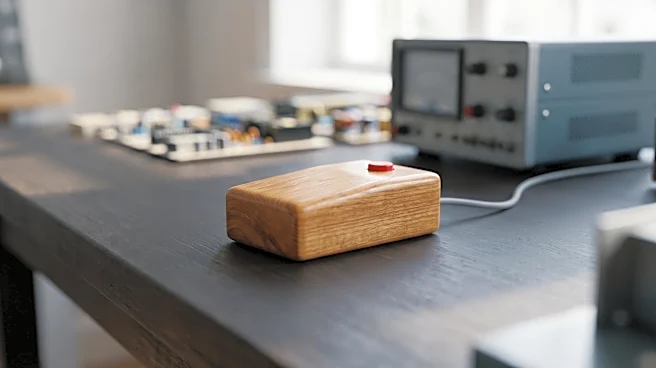
If Engelbart was the visionary, Bill English was the pragmatist who made the vision real. An electrical engineer, English was the first person to join Engelbart's lab and became his chief engineer. When Engelbart sketched the idea for a pointing device, it was English who built the first-ever prototype in 1963—a simple wooden shell with two perpendicular wheels. He was also the first person to ever use it. Later, English led a NASA-sponsored project that scientifically proved the mouse was a faster and more accurate pointing device than other alternatives, like a light pen or joystick. At the "Mother of All Demos," while Engelbart was on stage, it was English behind the scenes, masterminding the complex technical production that made the live connection and video feed possible.
The Software Architect: Jeff Rulifson
A revolutionary system requires revolutionary software, and that was the domain of Jeff Rulifson. As the lead programmer for the NLS, Rulifson was responsible for turning Engelbart's abstract concepts into functional code. He created the software that enabled many of the demo's most stunning features, including the command language and the display controls that allowed for things like hypertext linking and viewing information in multiple ways. His work was fundamental to the entire system's operation and earned him an ACM Software System Award, which he shared with Engelbart and English. Rulifson's software architecture was a critical, though often overlooked, foundation upon which the graphical user interfaces of the future would be built.
The Ripple Effect: From SRI to Silicon Valley
By the 1970s, funding for Engelbart's ambitious project dwindled, and the ARC team began to scatter. A crucial migration occurred when many key members, including Bill English and Jeff Rulifson, left SRI for a new research center just down the road: Xerox PARC. There, they continued and refined the concepts born at ARC. English developed the more advanced ball mouse, replacing the original wheel design. The team at PARC created the Xerox Alto, a personal computer that fully integrated the mouse and a graphical user interface. Though the Alto was not a commercial success, a fateful visit by Steve Jobs in 1979 inspired the designs for Apple's Lisa and, more famously, the Macintosh. The influence didn't stop there, shaping Microsoft Windows and virtually every personal computer that followed.