
A Tale of Two Blueprints
At its heart, every computer needs to do two things: read instructions (the 'how-to' guide) and access data (the 'what' it's working with). The big question is how it organizes this. The vast majority
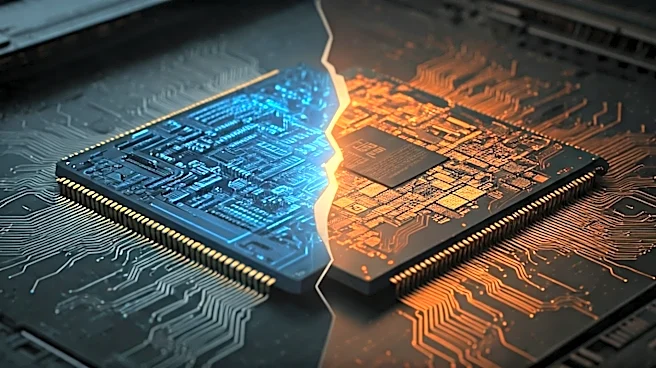
of computers, from your laptop to your smartphone, use what’s called the von Neumann architecture. Think of this as a library with one giant room where both the instruction manuals and the materials you need are stored on the same shelves, accessed by one very busy librarian. It's efficient and flexible, but that single librarian can become a bottleneck. Harvard architecture takes a different approach. Imagine a library with two separate, specialized wings: one exclusively for instruction manuals and another exclusively for materials. Each wing has its own dedicated librarian and its own set of doors. This is the core idea: it physically separates the storage and signal pathways for instructions and data.
So Why Does It Look Simple?
On paper, the Harvard model is incredibly straightforward. By giving instructions and data their own private lanes, the computer's processor can fetch the next instruction *at the same time* it’s finishing a calculation with data from the last one. The two librarians can work in parallel, without getting in each other's way. This promises a major boost in performance and predictability. There’s no traffic jam because you’ve built two separate highways.
This conceptual tidiness is its main appeal. It eliminates the 'von Neumann bottleneck,' where the processor has to wait because it can only fetch one thing at a time from a single memory source. In a simple, repetitive task, the Harvard approach seems like a clean, elegant, and obviously faster solution.
The Hidden Complexities
Here’s where the “and isn’t” part of the headline kicks in. That perfect separation creates its own problems. What if you need to update the software? In a pure Harvard system, the processor’s data path can’t write to the instruction memory. It’s like telling the librarian in the materials wing they are physically barred from ever adding a new instruction manual to the other wing. This makes the system rigid and inflexible.
Furthermore, building two completely separate memory systems, with their own wiring and controllers, can be more expensive and physically larger than a single, unified system. The design’s elegant simplicity on a whiteboard doesn't account for the messy realities of cost, physical space, and the need for software to be, well, soft—and updatable.
The 'Modified' Compromise We All Use
The limitations of a pure Harvard architecture were so significant that engineers came up with a brilliant workaround: the Modified Harvard architecture. This is the design that truly runs the modern world. It keeps the separate, high-speed pathways for performance but adds a special back-channel that allows data to be moved into the instruction path when needed.
Your laptop’s CPU uses this principle. It fetches instructions and data from a cache that is split (the Harvard part) but can load that cache from a unified main memory (the von Neumann part). It offers the speed benefits of parallel access while retaining the flexibility to treat code as data—essential for modern operating systems and applications. This hybrid model is an admission that the original “simple” idea needed a complex tweak to become practical for general-purpose computing.
The Specialist That Still Thrives
So, is the pure Harvard concept just a historical footnote? Not at all. It’s a reigning champion in a massive, unseen kingdom: embedded systems and Digital Signal Processors (DSPs). Think of the tiny computer managing your car's engine, the chip inside your digital camera processing photos, or the brains of your Wi-Fi router. These devices perform highly specific, repetitive tasks where speed and predictability are everything, and flexibility is almost irrelevant. Their software rarely, if ever, changes. For these applications, the unadulterated speed of a true Harvard architecture is the perfect tool for the job. Its 'flaw'—its rigidity—becomes its greatest strength.