




The Age of Uncanny AI Art
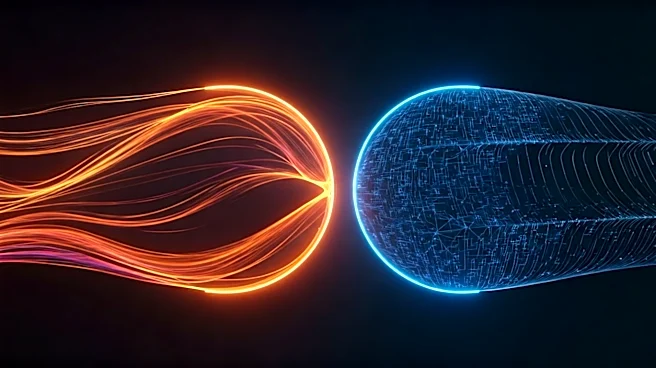
In the mid-2010s, the most exciting new idea in AI-generated art was the Generative Adversarial Network, or GAN. The concept, introduced in 2014, was brilliant: pit two neural networks against each other. One, the “generator,” creates fake images. The other,
the “discriminator,” tries to spot the fakes. Over millions of rounds, the generator gets incredibly good at making images that can fool the discriminator. The problem? For years, the results were more academically interesting than artistically compelling. GAN-generated images were often small, distorted, and had a distinctly unsettling, “uncanny valley” feel. You could tell a machine made them. They were good at textures but terrible at structure. A GAN might generate a dog with three heads or a face with eyes on its cheeks. The technology showed promise, but photorealism felt decades away. The AI community was making incremental progress, but no one was prepared for the sudden jump that was coming.
Enter BigGAN: A Leap in Realism
In late 2018, researchers at Google's DeepMind released a paper and a model called BigGAN. The results were staggering. Suddenly, an AI could generate high-resolution, coherent, and strikingly realistic images of everything from dogs and cheeseburgers to jellyfish and volcanoes. These weren't just slightly better than before; they were orders of magnitude better. For the first time, many of the images an AI produced were difficult to distinguish from real photographs at a quick glance. The dogs had the right number of legs. The landscapes had a sense of depth and logic. The jump in quality was so dramatic that it immediately reset expectations across the entire field. The reaction wasn't just excitement; it was a mix of awe and a little bit of fear. If AI could do *this* now, what would it be capable of in another few years? BigGAN wasn’t a household name, but within the AI world, it was a seismic event. It was the moment generative AI went from a quirky experiment to a technology with undeniable power.
The Secret Sauce: Scale and Control
So, what made BigGAN so different? The name itself gives a clue: it was all about scale. The DeepMind team trained their GAN on a vastly larger dataset and with significantly more computing power than previous efforts. They demonstrated that with enough data and processing muscle, the core GAN concept could break through its previous limitations. But it wasn't just brute force. The researchers introduced clever architectural tweaks and a technique that came to be known as the “truncation trick.” This gave users a dial to control the trade-off between image fidelity and variety. You could tell the model to play it safe and generate a very high-quality but typical-looking dog, or you could let it get more creative, increasing the risk of weirdness but also the potential for novelty. This element of creative control was a crucial step forward. It showed that AI image generation could be more than just a random output; it could be a directable tool. It was the beginning of the shift from AI as a generator to AI as a creative partner.
The Foundation for Today's AI Boom
While BigGAN was never released as a consumer product like DALL-E or Midjourney, its influence is everywhere. It proved that high-fidelity, large-scale image generation was not only possible but was a problem that could be solved with resources and clever engineering. This proof of concept catalyzed a wave of investment and research. The techniques and principles pioneered by the BigGAN team were built upon by subsequent models. When OpenAI released DALL-E a few years later, it used a different architecture (transformers instead of GANs) but followed the same philosophical path paved by BigGAN: massive scale, huge datasets, and a focus on quality and control. The stunning realism of today’s text-to-image models, which have taken over social media and sparked intense debates about art and ethics, can be traced back to the fundamental breakthrough BigGAN represented. It quietly drew the blueprint for the generative AI revolution we're living through today.