







From Raw Tech to Refined Experience
For years, the race in smart glasses was about cramming more tech—brighter displays, better cameras, faster processors—into a wearable form factor. But as the underlying technology matures, the industry's focus is pivoting from raw capability to user
experience. The first generation proved smart glasses could work; the next has to prove people actually want to wear them all day. This is where lens coatings enter the picture. No longer just a simple add-on, these microscopic layers are becoming a critical field of innovation, tackling the biggest remaining hurdles to mass adoption: visual quality, social subtlety, and personal style.
The War on Glare and 'Eye Glow'
The single most important functional coating for smart glasses is the anti-reflective (AR) layer. For regular glasses, AR coatings reduce reflections and eye strain. For smart glasses, they're essential for the core function. The digital information projected onto the lens has to compete with ambient light. Advanced AR coatings, often composed of multiple, precisely applied layers of metallic oxides, can increase light transmission to over 99%, ensuring the display is crisp and clear without forcing the device to burn through its battery on max brightness. More importantly for social acceptance, these coatings reduce the distracting 'eye glow'—the faint light from the projector that can be visible to others, immediately outing the wearer as using a tech device. Minimizing this effect makes interactions feel more natural and the glasses less obtrusive.
Privacy You Can Wear
As smart glasses become more capable, concerns about privacy—both for the wearer and those around them—are growing. Lens coatings offer a potential solution. One area of development is coatings that can obscure the device's tiny, embedded cameras from view, helping to alleviate the 'creepy' factor that has plagued the category since its inception. Another futuristic application is the development of electrochromic lenses. These smart coatings can electronically dim or lighten, adapting to ambient light conditions. This not only improves display visibility and saves power but opens the door to on-demand privacy, where a user could effectively 'frost' their lenses to prevent onlookers from peeking at their display. While still emerging, this technology points to a future where control over what you see—and what others see of you—is built directly into the lens itself.
Making Gadgets into Fashion
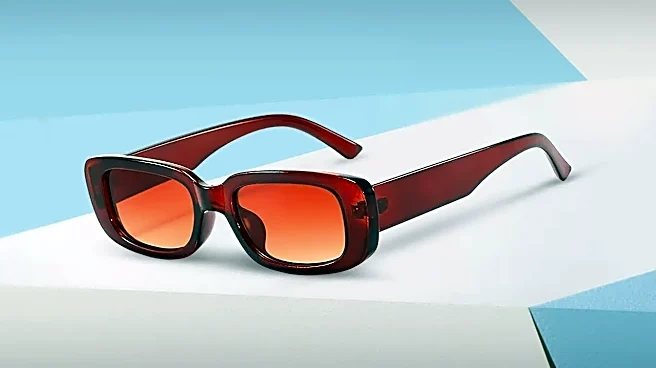
Ultimately, for smart glasses to become a mainstream consumer product, they need to be desirable as accessories. Coatings are key to this transformation. Hydrophobic and oleophobic layers, which repel water and oil, keep lenses clean from smudges and fingerprints—a practical necessity for any pair of glasses, but especially for a device you interact with via touch. Beyond utility, manufacturers are exploring a wider range of aesthetic options. Modern photochromic coatings that automatically darken in sunlight are faster and clearer than ever, eliminating the need to switch to sunglasses. The ability to apply durable, high-quality mirror finishes, subtle color tints, and even blue-light filtering layers without distorting the heads-up display allows for greater personalization. This turns the lens from a purely functional component into a canvas for style, allowing brands to offer distinct looks that appeal to different tastes.