





The Hype: An Immediate Price Catalyst
The most common mistake was viewing the Taproot upgrade, which went live in November 2021, as a short-term trading event. In a market conditioned by hype cycles, many expected the news of a major technological leap forward to trigger an immediate price
surge. When that didn't happen, they dismissed it as a non-event. This was a fundamental misreading. Taproot was never about a quick payday; it was a long-term infrastructure play. Unlike a flashy new feature on a consumer app, its benefits were designed to unfold over years, not hours. It was the equivalent of re-plumbing a skyscraper for greater efficiency and future potential—a crucial but invisible improvement, not a new penthouse to flip for a quick profit. The market, fixated on 24-hour charts, largely sold the news and missed the story.
The Reality: A Foundation for Privacy and Efficiency
So, what did Taproot actually do? At its core, it bundled three major improvements (known as BIPs 340, 341, and 342) that revolved around two key innovations: Schnorr signatures and Merklized Abstract Syntax Trees (MAST). Think of Schnorr signatures as a way to make a group activity look like a solo one. Before Taproot, a complex transaction involving multiple parties (like a corporate treasury transaction) stood out on the public blockchain. With Schnorr signatures, these multi-signature transactions could be bundled to look identical to a simple person-to-person payment. This was a huge win for both privacy and efficiency, as it made the blockchain less cluttered and transactions cheaper. MAST, meanwhile, made smart contracts more efficient by only revealing the part of the contract that was actually executed, keeping the rest of the conditions private and off the main chain.
Misconception: The Privacy Gains Were Minor
Another major oversight was downplaying Taproot's privacy enhancements. Critics at the time argued the changes were minor and that Bitcoin would remain easily traceable. While Taproot didn't make Bitcoin an anonymity-focused coin like Monero, it offered a significant leap in what's called 'plausible deniability'. By making complex transactions (like opening a Lightning Network channel or using a multi-signature wallet) look the same as standard ones, it muddied the waters for blockchain analysts. The more people use Taproot-style transactions, the larger the 'anonymity set' becomes, making it much harder to identify specific user behaviors. This wasn't about hiding from law enforcement; it was about providing users and businesses with a much-needed layer of commercial and operational privacy on a public ledger.
The Overlooked Potential: Bitcoin as a Smart Contract Platform
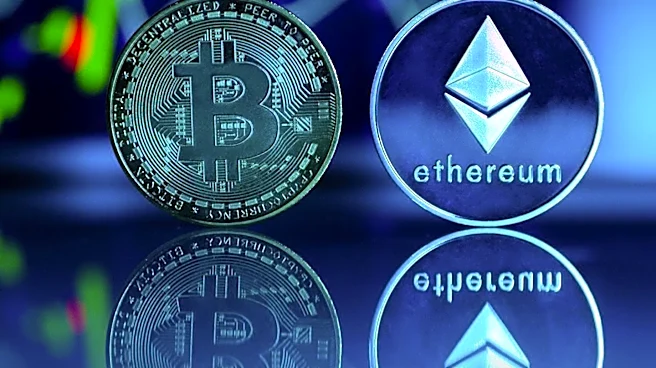
For years, the narrative was that Bitcoin was 'digital gold' and Ethereum was the world's smart contract computer. Taproot quietly challenged that binary. By making scripting more flexible and efficient, it laid the essential groundwork for more complex applications to be built on Bitcoin. It didn't aim to turn Bitcoin into an Ethereum clone, a fact some critics used to dismiss its importance. Instead, it enabled a new class of more secure and efficient smart contracts, particularly for use cases like Discreet Log Contracts (DLCs) and improved Lightning Network functionality. The upgrade opened the door for developers to build more sophisticated financial tools on Bitcoin's famously secure base layer, a possibility that most investors, focused on the DeFi boom on other chains, completely ignored. An unintended consequence of this new flexibility was the emergence of Ordinals and Inscriptions a year later, which brought NFT-like assets to Bitcoin and proved the scripting changes were more powerful than many first realized.