
A Titan Weighed Down
For years, Northrop Grumman was a sprawling defense conglomerate. It built everything from spy satellites and advanced drones to the massive aircraft carriers and nuclear submarines that formed the backbone
of the U.S. Navy. Through a series of acquisitions in the late 1990s and early 2000s, it had become a giant of land, sea, and air. A key part of this empire was its shipbuilding division, a legacy business responsible for some of the most complex machines on Earth. But this prestigious work came with a catch: building ships is an incredibly capital-intensive business with notoriously thin profit margins. While other parts of the company were pushing the boundaries of electronics and aerospace, the shipbuilding unit was seen as a cultural and financial anchor, dragging down overall performance with its uneven results.
The Choice to Cut the Cord
By 2010, then-CEO Wes Bush faced a critical choice. He recognized that the high-tech, high-margin world of aerospace, electronics, and information systems was a poor cultural and strategic fit with the industrial might of shipbuilding. The company was trying to be two different things at once. The "hidden" decision was made public in 2011: Northrop Grumman would spin off its entire shipbuilding business into a new, independent company named Huntington Ingalls Industries (HII). Rather than selling the division, Northrop gave shares of the new company to its existing stockholders. The move was a declaration of intent. As Bush stated at the time, the separation would allow Northrop Grumman to focus more intently on its core markets in aerospace, electronics, information systems, and technical services.
A New Company, A Sharpened Focus
Freed from the shipbuilding business, the new, leaner Northrop Grumman could pour its resources into the future of defense: the digital battlefield. The company doubled down on what it did best—stealth technology, autonomous systems, cybersecurity, and space-based platforms. This wasn't just a portfolio shuffle; it was a fundamental shift in identity. The company was no longer just a heavy industrial manufacturer but a technology and systems integrator focused on the most advanced, and profitable, sectors of national security. This pivot made the company more agile and better positioned to compete for the next generation of defense contracts, which would be defined more by software and sensors than by sheer tonnage of steel.
The Bet Pays Off: Winning the Future
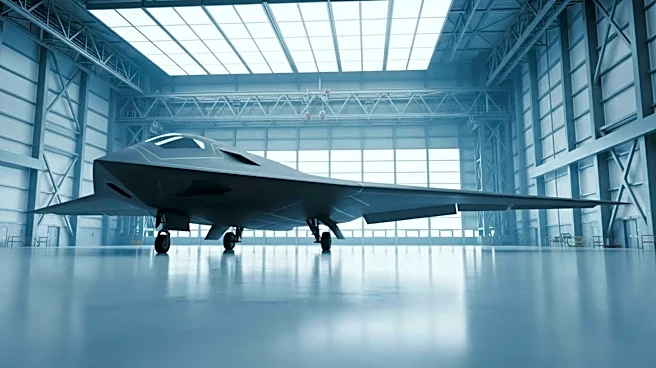
The wisdom of the 2011 spin-off became undeniable a few years later. In 2015, Northrop Grumman won one of the most coveted defense contracts in a generation: the right to develop and build the B-21 Raider, the nation's next long-range stealth bomber. This multi-billion dollar program is the crown jewel of the U.S. Air Force's modernization efforts. Winning it required exactly the kind of focused expertise in stealth, advanced manufacturing, and open systems architecture that the company had cultivated since shedding its shipbuilding division. Subsequent acquisitions, like that of rocket and missile maker Orbital ATK in 2018, further solidified its position in space and strategic deterrence. Today's Northrop Grumman, a leader in high-tech defense from the deep sea to deep space, was truly forged in that single decision to let a piece of its past go.