




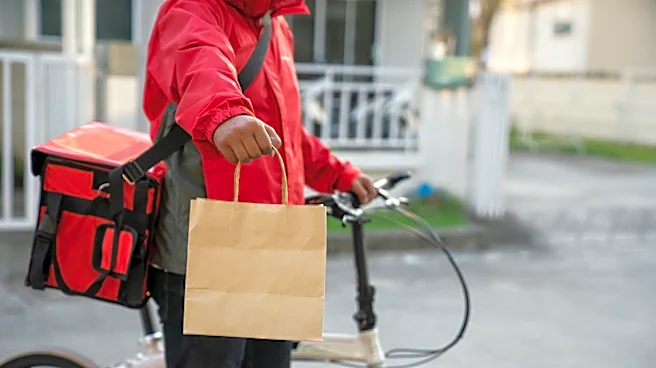




1. DoorDash
Think of DoorDash as Instacart’s sibling in the restaurant world. As the dominant U.S. player in food delivery, it faces all the same brutal challenges: razor-thin margins, intense competition, and a constant battle to balance the needs of customers,
merchants, and drivers. Like Instacart, DoorDash has realized that just delivering things isn't enough. It's aggressively expanding into new verticals like grocery and retail, building a high-margin advertising business, and pushing its DashPass subscription to lock in customer loyalty. Studying DoorDash is like watching a parallel universe unfold—a lesson in how another company is tackling the exact same economic puzzles, from logistics efficiency to making the unit economics of on-demand delivery actually work.
2. Uber
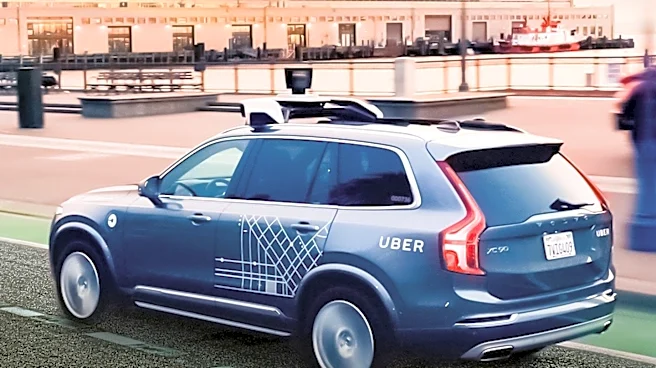
Uber is the original architect of the gig economy, and its story is the essential prequel to Instacart's. For years, Uber burned billions in a global quest for growth, popularizing the very marketplace model that companies like Instacart now depend on. The fascination with Uber today lies in its hard-won pivot to profitability. After shedding costly side projects and focusing on its core mobility and delivery segments, Uber has demonstrated that this model can be profitable at scale. For anyone wondering about Instacart’s long-term future, Uber provides a potential roadmap—and a cautionary tale. It highlights the immense challenge of managing a global gig workforce and the strategic discipline required to turn a world-changing service into a sustainable business.
3. Shopify
If you want to understand Instacart’s most important strategic pivot, you need to study Shopify. While Instacart started by serving customers directly, it's now aggressively building out its "Instacart Platform," a suite of e-commerce and fulfillment tools for grocery stores to use themselves. This is Shopify's exact playbook: instead of competing with businesses, empower them. Shopify became a behemoth by providing the digital infrastructure for millions of merchants to build their own online stores. It’s the ultimate “arming the rebels” strategy. By watching Shopify, you can see the potential endgame for Instacart’s enterprise business—a future where it's less of a consumer-facing delivery service and more of a foundational operating system for the entire grocery industry.
4. Gopuff
Gopuff represents a fascinating alternative path in the world of on-demand delivery. Unlike Instacart's marketplace model, which relies on existing grocery stores, Gopuff built its business on a vertically-integrated approach. It owns its inventory and operates from hundreds of its own mini-warehouses, often called “dark stores.” This gives Gopuff total control over the customer experience and potentially higher margins. However, it's also incredibly capital-intensive. The story of Gopuff is one of navigating a boom-and-bust cycle, surviving a purge in the “ultra-fast” delivery space, and right-sizing its operations to focus on sustainable economics. It’s a case study in the risks and rewards of owning your infrastructure versus building a platform on top of others'.
5. Flexport
To see Instacart’s ambition scaled up to a global B2B level, look at Flexport. This company is tackling one of the oldest, most complex industries on earth: global freight forwarding. Just as Instacart brought a slick digital interface to the analog world of grocery shopping, Flexport aims to be the technology-first operating system for global trade. It provides businesses with software to manage everything from ocean cargo to customs and final-mile delivery. Like Instacart, Flexport's story is about the monumental challenge of digitizing a massive, entrenched industry while navigating the difficult path to profitability. Watching Flexport is a lesson in how technology platforms are moving beyond consumer convenience to rewire the core infrastructure of the global economy.