




From the Cloud to Your Desktop
Until recently, the heavy lifting of artificial intelligence happened somewhere else. When you asked a chatbot a question or used a sophisticated filter, your request traveled to a data center, was processed by a supercomputer, and the result was sent
back. The 'AI PC' flips that model on its head. These are laptops and desktops built with specialized hardware designed to handle AI tasks locally, without needing to constantly phone home to the cloud. It represents a fundamental shift in personal computing, moving beyond just raw speed to making our devices smarter, more responsive, and more aware of our needs.
The New 'Brain' Inside the Machine
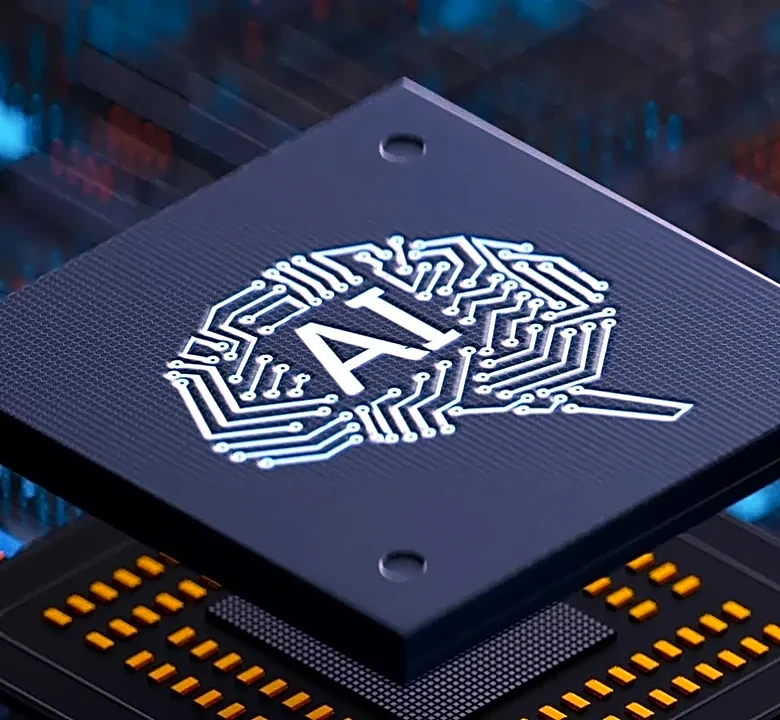
The magic ingredient making this possible is the Neural Processing Unit, or NPU. Think of it as a new, specialized brain in your computer. For decades, the main brain was the CPU (Central Processing Unit), which is a brilliant generalist. Then came the GPU (Graphics Processing Unit), a specialist for handling visuals and gaming. The NPU is the next evolution: a processor exclusively designed for the unique mathematics of AI and machine learning. By offloading AI work to the NPU, your computer can handle these tasks with incredible speed and efficiency, freeing up the CPU and GPU to do what they do best. This trio—CPU, GPU, and NPU—forms the backbone of the modern AI PC.
So, What Can It Actually Do?
This isn't just about making loading bars disappear faster. On-device AI unlocks capabilities that feel seamless and integrated. Imagine your video call software automatically keeping you perfectly framed and suppressing background noise, all while using less battery. Or consider an AI assistant like Microsoft's Copilot that can summarize a document for you instantly, without ever uploading its contents to a server. Other examples include real-time language translation during a conversation, advanced photo editing that happens in a snap, and security features that can detect threats before they even connect to the internet. The key is that these features are fast, available offline, and respect your privacy.
Why Now? The Push for Privacy and Performance
There are two major forces driving this trend. The first is performance. Sending data to the cloud and back introduces a slight delay, or 'latency'. For some AI tasks, like generating an essay, this is fine. For others, like real-time interaction, that lag can be jarring. Running AI locally is virtually instantaneous. The second, and arguably more important, driver is privacy. As we rely on AI for more sensitive tasks, the idea of sending personal documents, photos, and conversations to third-party servers becomes less appealing. On-device AI keeps your data where it belongs: on your device. This approach inherently offers a more secure and private user experience.
The Players in a New Arms Race
This shift has kicked off a new competitive front among the giants of tech. Microsoft is a major driver on the software side, integrating on-device features into Windows and its Copilot assistant to create a compelling reason to upgrade. On the hardware side, a battle is raging between the chipmakers. Intel is heavily promoting its 'Core Ultra' processors, while AMD is pushing its 'Ryzen AI' platform. Meanwhile, Qualcomm, a dominant force in mobile chips, has entered the PC market with its power-efficient Snapdragon X Elite chips, designed from the ground up for this new era of on-device AI. For consumers, this competition is a good thing, promising rapid innovation and a wide array of choices in the years to come.