







From Hobby Project to Market Creator
In 2006, from a university dorm room, founder Frank Wang started DJI not just to build drones, but to solve a problem: remote-controlled flight was too hard. Early efforts focused on flight control systems for hobbyists. But the company's genius was in
seeing a bigger market. The launch of the Phantom in 2013 was a watershed moment. It wasn't the first quadcopter, but it was the first mass-market, ready-to-fly drone with an integrated camera that made professional-looking aerial photography accessible to everyone. Suddenly, a complex hobby became a consumer product. DJI didn't just enter a market; it effectively created the consumer drone industry as we know it.
The 'Apple of Drones' Ecosystem
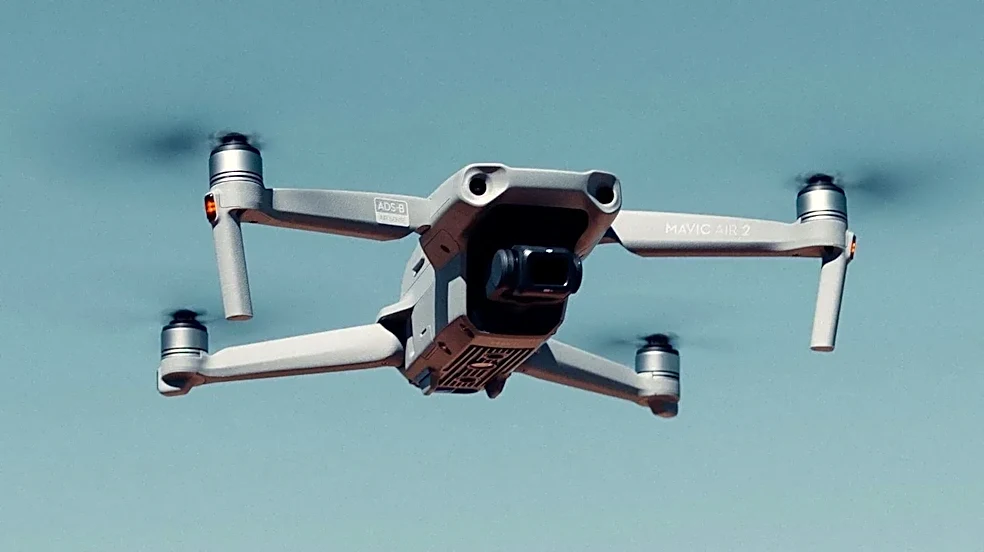
The secret to DJI's long-term dominance goes far beyond any single product. Like Apple, DJI built a walled garden that was hard to leave. The introduction of the foldable Mavic Pro in 2016 further revolutionized portability and ease of use. More importantly, DJI invested heavily in a seamless user experience. Its software, like the DJI Fly app, was intuitive. Its gimbal stabilization technology was best-in-class, producing impossibly smooth video. By offering a diverse product line—from the pocket-sized Mini series to the professional Inspire series—DJI had a drone for every user, all feeding into the same user-friendly ecosystem. This focus on the complete experience, not just the hardware, created immense brand loyalty and locked out competitors who only focused on specs.
The Shadow of National Security
DJI's rise coincided with growing geopolitical friction between the U.S. and China. As a Shenzhen-based tech giant, it was inevitably pulled into the fray. Starting around 2017, U.S. government agencies began sounding the alarm over data security. The core concern was that sensitive flight data, including images of critical infrastructure, could be accessed by the Chinese government. This led to a series of escalating actions. The U.S. Army banned DJI drones for its own use, and the Department of the Interior grounded its fleet. In 2020, the Commerce Department added DJI to its 'Entity List,' restricting its access to U.S. technology for allegedly enabling human rights abuses in China.
Fighting a War on Two Fronts
Caught in a geopolitical vise, DJI has been fighting a battle for both market access and public trust. The company has consistently denied allegations of improper data sharing, stating that users must opt-in to share data and that it has no access otherwise. It introduced a 'Local Data Mode' to prevent all internet communication and has commissioned multiple independent security audits which found no evidence of backdoors or malicious data transfers. Despite these efforts, the restrictions have tightened. The American Security Drone Act, passed into law, bans federal agencies from using Chinese drones. More recently, the FCC added foreign-made drones to its 'Covered List,' blocking new models from being approved for sale in the U.S., creating uncertainty for the company's future in one of its biggest markets.