






The New Reality: A Tax on Ambition
Let's be clear: when we talk about the 'GPU Era', we're talking about the age of Artificial Intelligence. Modern AI, from the large language models that power chatbots to the complex systems that can design drugs or operate robots, runs on Graphics Processing
Units. And one company, NVIDIA, has a near-monopoly on the high-end chips required. For founders, this has created a new, non-negotiable cost of doing business. Access to powerful GPUs is now the primary bottleneck for any ambitious AI startup. It's a 'NVIDIA Tax' on innovation. As discussions at Disrupt made clear, the biggest question for founders today isn't just 'do you have a good idea,' but 'can you get the compute power to make it a reality?'. This scarcity and high cost fundamentally change the economics of starting a tech company, forcing a level of capital intensity not seen since the early days of hardware.
Stop Trying to Build a Better Engine
The immediate temptation for many founders is to join the arms race—to chase bigger models and more processing power. This is a losing battle. The conversations at TechCrunch Disrupt 2026 underscored a different path. While giants like Google, Meta, and OpenAI are locked in a struggle over foundational models, the real opportunity for startups is in the application layer. Founders shouldn't be trying to build a better engine than NVIDIA; they should be designing unique vehicles that engine can power. The consensus is that the next wave of billion-dollar companies won't be those who build the largest language model, but those who apply existing AI to specific, high-value vertical problems in industries like manufacturing, healthcare, and logistics. Your competitive advantage is no longer the raw power of your model, but the uniqueness of the problem you solve with it.
The Return of the 'Full-Stack' Startup
For the past decade, the lean startup model advised founders to build as little as possible, relying on a web of third-party APIs. The GPU Era is flipping that script. The most defensible startups emerging today are 'full-stack,' meaning they control their entire technological pipeline. This doesn't mean fabricating your own chips, but it does mean owning your data, fine-tuning your own models, and building a product that isn't just a thin wrapper around a public API. An emerging theme is that true innovation happens when a company leverages its own proprietary data to train or customize AI models. This creates a powerful feedback loop: a better product generates more unique data, which in turn improves the AI, creating a moat that competitors who rely on generic tools cannot cross. It's a return to first-principles, where deep technical expertise and a unique data asset are the keys to long-term value.
How Founders Can Win Now
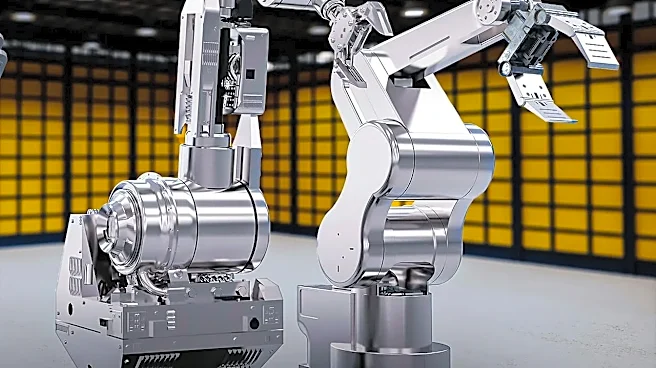
So, how can a founder navigate this challenging landscape? The takeaways from Disrupt 2026 point to a clear strategy. First, focus obsessively on a niche. Don't build 'an AI for doctors'; build 'an AI that reads pre-operative MRI scans for a specific type of knee surgery.' This specificity allows you to build a superior product with a manageable data set. Second, get creative with your compute. Explore smaller, open-source models that can be run more efficiently on less-expensive hardware. Not every problem requires a sledgehammer. Third, as NVIDIA's own focus on 'physical AI' shows, the intersection of software and the real world is a massive opportunity. Startups building AI for robotics, autonomous systems, and industrial automation are tackling problems where the value is immense and the data is naturally proprietary. The goal is to be clever and targeted, finding spaces the tech giants have overlooked.