








From Radio Tubes to Global Power
Raytheon’s story begins not with a bang, but with a hum. Founded in 1922 as the American Appliance Company, its first breakthrough was a rectifier that let radios run on household AC power instead of clunky batteries. But its destiny was forged in the fires
of World War II. The company was tapped to mass-produce the top-secret British magnetron, the core of advanced radar systems. By war's end, Raytheon had made about 80% of all magnetrons, equipping nearly every U.S. Navy ship with its radar. This early, critical partnership with the U.S. government set a precedent. After the war, as others diversified, Raytheon doubled down on defense, developing the first missile to intercept a flying target in 1950 and creating iconic missile families like the Hawk, the predecessor to today's Patriot system. This deep integration during the Cold War cemented its role as a vital cog in the national security machine.
The Politics of Proximity
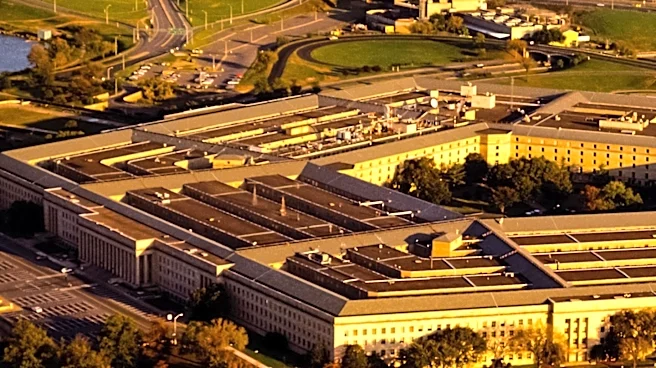
A key part of Raytheon's untouchable status comes from a strategy of proximity—not just to military bases, but to the halls of power. The company has long been a master of the “revolving door,” where high-ranking government and military officials leave public service for lucrative positions at defense firms, and vice versa. Reports have shown Raytheon hiring dozens of former officials to serve as executives, board members, and lobbyists. For example, current Secretary of Defense Lloyd Austin served on Raytheon's board after retiring as a four-star general and before re-entering government. This constant flow of personnel creates an intricate web of relationships and an unparalleled understanding of the Pentagon's budget and procurement processes. It's an influence that can't be measured in lobbying dollars alone, though the company spends millions annually to make its voice heard on Capitol Hill. This creates a feedback loop where the company isn't just responding to defense needs; it's helping to define them.
Indispensable by Design
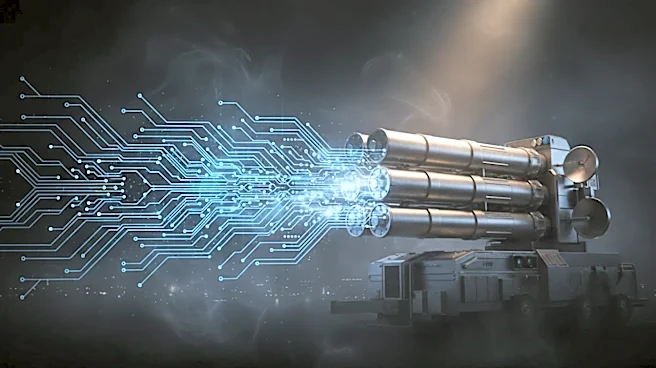
Raytheon's power also stems from its products. The company doesn’t just build weapons; it builds systems that become the backbone of U.S. and allied military strategy. The Tomahawk cruise missile, capable of striking a precise target from 1,000 miles away, has been used over 2,300 times in combat, often the first weapon fired in a conflict. The Patriot missile defense system is the foundation of air defense for 19 nations, creating a global network of interoperable allies all reliant on Raytheon technology for protection against missile and air threats. Since 2015, the Patriot system has intercepted over 150 ballistic missiles in combat operations. By creating and controlling these critical, best-in-class systems, Raytheon makes itself indispensable. A country can't easily switch missile defense providers, making Raytheon a long-term, embedded partner in their national security.
The Business of Global Strategy
In 2020, Raytheon completed a massive merger with United Technologies, creating a new behemoth called Raytheon Technologies (since rebranded as RTX). This move was more than just a business deal; it was a strategic consolidation of power. The merger combined Raytheon's elite defense portfolio (missiles, sensors, cyber) with United Technologies' dominance in commercial and military aerospace through Pratt & Whitney (jet engines) and Collins Aerospace (avionics). The new RTX is a diversified giant, less vulnerable to swings in any single market. Its products are now in nearly every commercial and military aircraft. This scale allows it to not only weather defense budget cuts but also to shape foreign policy. Foreign military sales are a huge driver of business, turning U.S. allies into long-term customers and further intertwining the company's success with America's global posture.