






The King of the Minicomputer
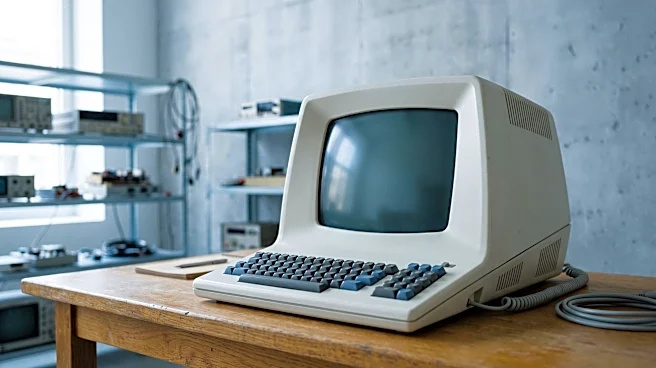
Before the personal computer landed on every desk, the world ran on mainframes and minicomputers. DEC didn't invent the minicomputer, but it perfected and dominated the market. Founded in 1957, the company rose to prominence with its PDP and later VAX
lines of computers. These machines were smaller and more affordable than the room-sized mainframes from IBM, making powerful computing accessible to universities, research labs, and medium-sized businesses for the first time. The VAX series, introduced in 1977, became the gold standard, celebrated for its power and flexibility. Running on DEC's proprietary VMS operating system, the VAX ecosystem was a walled garden, but it was a beautiful, high-performance garden that customers loved. This success transformed DEC into a global powerhouse.
The World Changes, DEC Doesn't
By the mid-1980s, the ground was shifting. The personal computer, driven by low-cost microprocessors from companies like Intel and user-friendly operating systems from Microsoft, was rapidly moving from a hobbyist's toy to an essential business tool. But DEC’s leadership, particularly its founder Ken Olsen, was famously dismissive of the PC. He and other executives saw them as cheap, underpowered devices, no match for their sophisticated minicomputers. Instead of embracing the PC revolution, DEC doubled down on its own proprietary world. The company continued to pour resources into its VAX line and its VMS operating system, believing its integrated, high-margin model was superior to the chaotic, low-margin world of commodity hardware.
The Alpha Chip: A Billion-Dollar Gamble
The ultimate expression of this contrarian strategy was the Alpha chip. Facing the twilight of the 32-bit VAX architecture, DEC knew it needed a next-generation platform. Instead of adopting the emerging industry standards, it embarked on a massively expensive project to create its own 64-bit RISC processor: the Alpha AXP. The goal was audacious: to create the world's fastest microprocessor and maintain that lead for 25 years. It was a bet of at least $2 billion, a staggering sum in the early 1990s. The Alpha chip was, by all technical accounts, a masterpiece of engineering—blazingly fast and years ahead of its time. But it was an expensive, proprietary chip in a world that was increasingly prioritizing low-cost, standardized components.
A Bet Against an Open Future
DEC's bet wasn't just on a piece of silicon; it was a bet against the entire direction of the technology industry. While competitors like Sun Microsystems embraced standard Unix operating systems and off-the-shelf components, DEC clung to its vertically integrated model. Customers who bought Alpha systems were locked into DEC's hardware and its OpenVMS or Tru64 UNIX operating systems. The problem was that the rest of the world was coalescing around the "Wintel" duopoly of Microsoft Windows and Intel processors. Software developers prioritized writing applications for this massive, growing market, leaving platforms like Alpha with a fraction of the available software. Despite its technical superiority, the Alpha chip struggled to gain market share against Intel's sheer volume and vast ecosystem.
The Inevitable Collapse
The strategy proved catastrophic. While DEC was spending billions on Alpha, its core minicomputer business was rapidly eroding as powerful, inexpensive servers from PC companies ate into its market. The company began posting massive financial losses. Ken Olsen was forced to resign in 1992, the same year Alpha was launched. His successors couldn't reverse the decline. DEC was a high-cost company in a low-cost world, saddled with expensive fabrication plants and a sales model that was no longer competitive. In 1998, what was left of the once-mighty Digital Equipment Corporation was sold to Compaq for about $9.6 billion—a titan brought down by its refusal to accept a future it didn't control.