







1. Focusing Only on Automotive Gross Margins
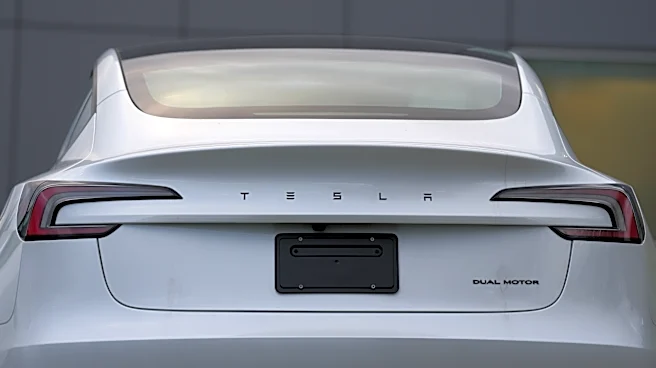
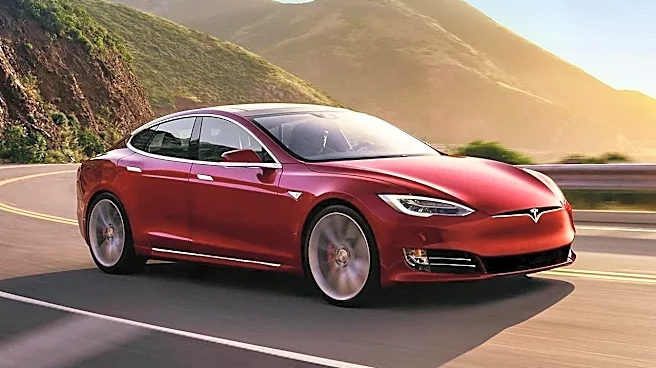
The classic way to judge a car company is by its automotive gross margins. While important, obsessing over this single metric for Tesla is like judging a tech company by its office furniture. The real story, and the justification for Tesla's trillion-dollar
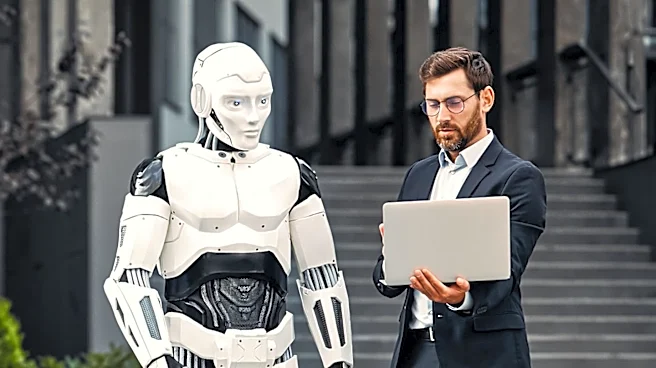
valuation, lies in future, high-margin revenue from software and services—namely Full Self-Driving (FSD), robotaxis, and Optimus robots. Analysts who get bogged down in whether margins slipped a percentage point due to price cuts are missing the forest for the trees. The core business needs to be healthy enough to fund the AI dream, but the dream itself isn't measured in car-by-car profitability.
2. Taking Capital Expenditures (CapEx) at Face Value
Tesla's capital spending has exploded, with forecasts for 2026 hitting a staggering $25 billion, nearly triple the previous year. A common error is to view this purely as a cost. A smarter reading requires asking: what is this money buying? A dollar spent on a new vehicle assembly line has a different return profile than a dollar spent on a new AI data center or chip-making equipment. The massive surge in CapEx is the most direct financial signal of Tesla's pivot to a 'physical AI' company. It's causing near-term pain, like an expected negative free cash flow, but it's also the clearest evidence that the company is building the foundational infrastructure for robotaxis and Optimus. The mistake is seeing the spend; the insight is in seeing what the spend is building.
3. Confusing R&D Spending with Pure AI Investment
Analysts often look to the Research and Development (R&D) line item for clues on innovation. However, at Tesla, this number is notoriously murky. It bundles everything from designing a new seatbelt to developing the neural networks for Optimus. There's no clean way to isolate how many of those billions are going directly to AI versus more mundane vehicle engineering. As a result, a spike in R&D doesn't automatically mean a breakthrough in FSD is imminent. The more telling indicators often lie outside the income statement, in the qualitative updates on the earnings call or specific CapEx projects dedicated to AI compute.
4. Equating FSD Revenue with Technical Progress
The 'Services and other' revenue line includes money from FSD subscriptions and one-time purchases. It’s tempting to see a rise here as proof that the autonomous software is getting better. This is a flawed connection. This revenue is primarily an accounting measure, reflecting when Tesla can recognize deferred revenue, and an indicator of the 'take rate'—how many customers are opting to buy the feature. It doesn't directly correlate with the system's actual capabilities or how close it is to achieving full, unsupervised autonomy. Progress on that front is more likely to be signaled by announcements of expansion into new robotaxi markets or updates on regulatory approvals, not the revenue line itself.
5. Ignoring the Energy Business as an AI Play
For many, Tesla's energy storage business is a side story. That's a huge oversight. The division is growing rapidly, with deployments of storage products surging. More importantly, it's deeply connected to the AI strategy. Large-scale battery storage requires sophisticated software for grid optimization, energy trading, and stabilizing power networks—all tasks driven by AI. As the world transitions to renewable energy, the software managing that energy becomes immensely valuable. Viewing the energy segment merely as 'selling batteries' ignores the high-margin AI software layer that makes it all work and represents a massive, often underestimated, growth area.
6. Underestimating Qualitative Executive Commentary
Some of the most valuable AI signals in an earnings report aren't numbers at all, but the specific words used by executives on the subsequent call. Analysts make a mistake when they gloss over the qualitative framing. For a decade, the refrain was that robotaxis were just around the corner. Now, the language is shifting to concrete, near-term capital allocation for the 'Cybercab' and retrofitting factories for Optimus production. Paying attention to what projects get specific mention, what timelines are given (or avoided), and how confidently executives speak about overcoming technical hurdles provides crucial context that raw financial data lacks.
7. Thinking of AI as Zero-Cost Software
The allure of AI is the promise of software-like margins: write the code once, sell it infinitely. But this misses a critical input. Training world-class AI models requires an immense and costly physical infrastructure, primarily massive clusters of specialized processors housed in data centers. This is the hardware 'cost of goods sold' for AI. Tesla's Dojo supercomputer and its multi-billion dollar investment in AI chips are not optional expenses; they are the factory. Analysts who model Tesla's future AI profits without fully accounting for the massive, ongoing capital and operational expense of the underlying compute infrastructure are missing a giant piece of the puzzle and overstating potential near-term profitability.