


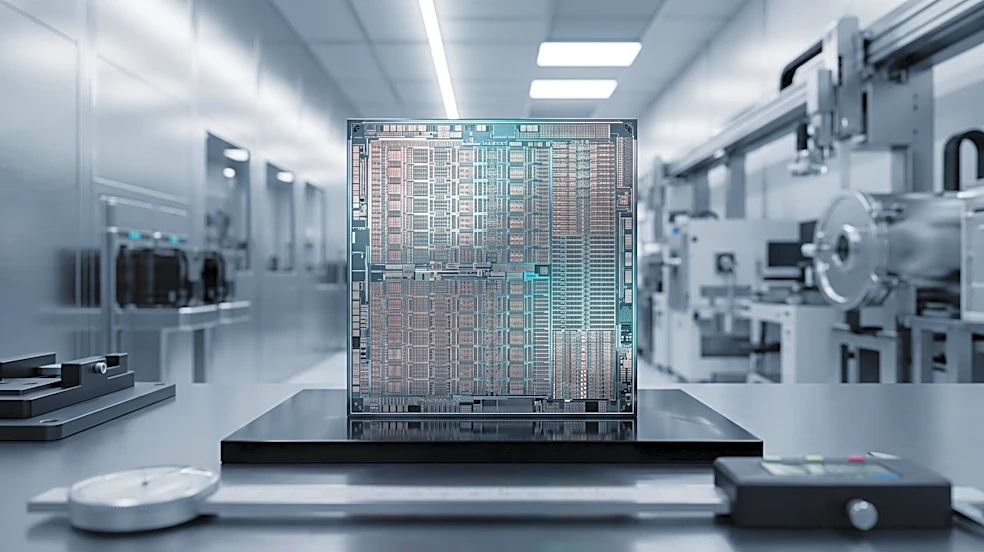


What Is HBM and Why Does AI Need It?
Think of a powerful AI processor like a world-class chef who can cook dozens of dishes a minute. Now, imagine this chef only has one tiny prep station. No matter how fast they are, they’re stuck waiting for ingredients. This is the 'memory wall' in AI,
and High-Bandwidth Memory is the solution. HBM isn't just more memory; it's an entirely different architecture. Instead of placing memory chips around a processor, HBM stacks them vertically, like a skyscraper, and connects them with thousands of data pathways. The result is a super-wide, ultra-fast highway that can feed enormous AI models the billions of data points they need without delay. For the massive GPUs that power today's AI, like those from NVIDIA, HBM is not a luxury—it's a necessity. Without it, the most powerful chips would sit idle, waiting for data.
The Supply Crunch: A Three-Horse Race
The problem is that making this 'memory skyscraper' is incredibly complex, and only three companies dominate the market: SK Hynix, Samsung, and Micron. Right now, SK Hynix holds a commanding lead, supplying a majority of the HBM for top-tier AI chips. The demand, fueled by an insatiable appetite for AI accelerators, has completely outstripped supply. Key manufacturers like SK Hynix and Micron have already reported that their entire production capacity for HBM is sold out through 2026. This has given them unprecedented pricing power and created a two-tiered market of 'haves' and 'have-nots'. Even NVIDIA, the king of AI hardware, has been forced to make massive, multi-billion dollar agreements to secure its future supply, effectively booking out production lines years in advance.
The NVIDIA Chokepoint
At the center of this constraint is NVIDIA. Its GPUs, like the H100 and its successor 'Blackwell' B200, are the engines of the AI industry, and they are incredibly thirsty for memory. The Blackwell B200, for example, requires 192GB of the latest HBM3E memory, a 140% jump from its predecessor. Multiply that by millions of chips, and you get a demand tsunami that manufacturers are struggling to meet. The situation is so tight that any hiccup has major consequences. For instance, Samsung has faced challenges in getting its latest-generation HBM qualified by NVIDIA, which further tightens the bottleneck and puts more pressure on the other suppliers. This dependency means the pace of the entire AI buildout is no longer just about designing faster chips; it's about the physical ability to produce and secure enough HBM to go with them.
The View From GITEX Global
This hardware reality is casting a long shadow over industry events like GITEX Global in Dubai. While the public-facing discussions are often about the incredible potential of AI applications, the private conversations in the executive suites are about this supply chain crunch. GITEX attracts leaders and nations from around the world who are all trying to build their own AI infrastructure to stay competitive. They are coming to the market ready to invest, only to find that the most critical components are already spoken for. The event highlights the global scramble for these limited resources. The AI race isn't just being run in the cloud with algorithms; it's happening on the factory floors of a handful of memory manufacturers, and the outcome will determine who gets to build the future, and who has to wait in line.