







A Language Forged by the Pentagon
To understand Ada, you have to go back to its origins. In the 1970s, the U.S. Department of Defense (DoD) had a colossal software problem. Its myriad critical systems were written in over 450 different programming languages, creating a maintenance and security
nightmare. The Pentagon decided it needed one single, ultra-reliable language to rule them all. After a multi-year competition, a design led by French computer scientist Jean Ichbiah was chosen and named 'Ada' in honor of Ada Lovelace, the world's first programmer. From its inception, Ada wasn't designed to be popular or fun; it was designed for correctness, safety, and maintainability in systems where failure was not an option.
The Premature Obituaries
For years, developers predicted Ada's demise. Compared to flexible, 'get-it-done' languages like C and C++, Ada was seen as verbose, complex, and restrictive. It enforced strict rules that made quick-and-dirty coding impossible. The DoD even mandated its use for all mission-critical software starting in 1991, a rule that was eventually dropped in 1997 as the world shifted toward commercial off-the-shelf technology. For many in the mainstream tech world, Ada seemed like a relic—a slow, bureaucratic language tied to government contracts, destined to be overtaken by nimbler, more modern alternatives.
Its Superpower: Being Unbreakably Boring
The 'real reason' Ada survived is precisely because of the features that made it seem uncool: its fanatical focus on safety and reliability. Ada was designed to prevent entire classes of bugs before a program ever runs. Its strong typing system, run-time checks, and built-in concurrency support are engineered to catch errors early. Think of it this way: a bug in a social media app might cause a crash and some user frustration. A bug in a plane's fly-by-wire system, a train's signaling network, or a nuclear reactor's control software can have catastrophic consequences. In these high-stakes domains, 'boring' is a feature, not a bug. The language's design makes it incredibly difficult to write unsafe code, which is exactly what you want when lives are on the line.
The Hidden Code Running the World
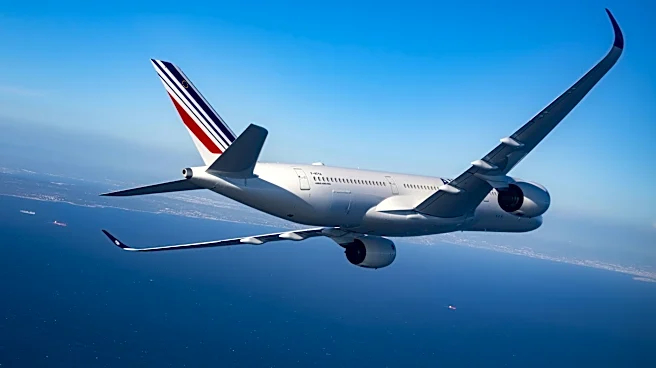
While you won't find many startups building their next app in Ada, the language is quietly running some of the world's most critical infrastructure. It's in the flight control systems of aircraft like the Boeing 777 and Airbus A380. It manages signaling for high-speed rail and subway systems in Paris, London, and New York City. It's been used in NASA space missions, military satellites, and countless defense systems. Ada never needed to win the popularity contest because it cornered the market on high-integrity systems. Companies in aerospace, defense, and transportation don't choose Ada because it's trendy; they choose it because it's a proven, certifiable tool for building software that absolutely cannot fail.