







The Service-Based Architecture Shift
In the old 4G LTE days, network elements were tightly coupled. If you wanted to upgrade an interface between the MME and the SGW, you were essentially performing surgery on a single, rigid organism. One change could trigger a cascade of issues across
the entire link. 5G changes this through Service-Based Architecture (SBA). Think of it like moving from a landline phone system where every wire is hard-coded to a modern smartphone ecosystem. In SBA, control plane elements are broken down into independent service modules that communicate via common interfaces using HTTP/2 and JSON. Instead of hard-coding every connection, elements use a registration and discovery mechanism. It is much like using a food delivery app: you do not need to memorize the phone number of every restaurant in town; you just search for what is available nearby through a central platform. This modularity allows for elastic scaling and much easier API integration for industry clients.
SMF vs. UPF: The Management Duo
One of the most common pitfalls for engineers transitioning to 5G is conflating the Session Management Function (SMF) with the User Plane Function (UPF). While they work in tandem, their roles are fundamentally different. The SMF is the 'manager' or 'dispatcher.' It handles session management, assigns IP addresses, selects the appropriate UPF, and dictates how data should be handled via Quality of Service (QoS) rules. The UPF, on the other hand, is the 'worker' or 'delivery driver.' It is the element through which all user data actually flows. If you are troubleshooting a connection issue, you must distinguish between them: if there is a session setup problem, look at the SMF; if data is flowing but being dropped or throttled, look at the UPF. Confusing these two is like blaming the logistics manager for a truck being stuck in traffic; one decides where the truck goes, while the other actually drives it.
The Power of UPF Downstreaming
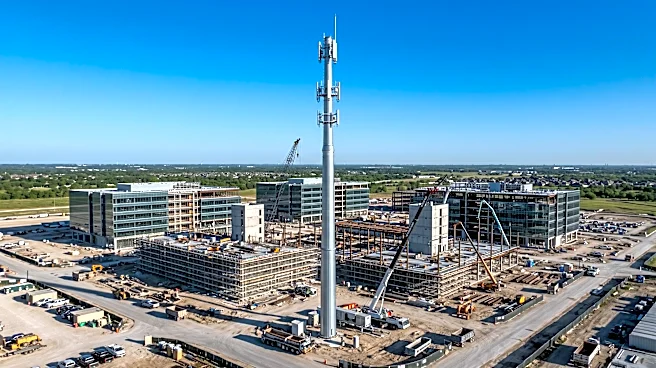
The real magic of 5G—and what enables things like industrial automation and ultra-low latency applications—is the ability to move the UPF closer to the user. In legacy networks, data had to travel to a centralized core in a major regional data center before heading back out to its destination. In 5G, we can 'sink' or push the UPF down to local edge sites, such as an enterprise campus or a factory floor. This reduces end-to-end latency from tens of milliseconds down to just a few. However, this creates a new engineering challenge: management complexity. The more UPFs you deploy at the edge, the more sessions your SMF has to manage via the N4 interface, significantly increasing operational monitoring requirements.
Why QoS Isn't Just One Parameter
Many engineers mistakenly believe that configuring Quality of Service (QoS) is as simple as setting a single priority flag. In reality, 5G QoS operates through specific flows defined by several interlocking parameters: the 5G QoS Identifier (5QI), Allocation and Retention Priority (ARP), and bit rate limits like Guaranteed Bit Rate (GBR) and Maximum Bit Rate (MBR). If you only configure one of these, your policy will likely fail in practice. The 5QI determines how packets are treated and prioritized; the ARP determines which flows win during resource contention; and the GBR/MBR settings define the actual speed limits of those lanes. It is exactly like designing a highway: you cannot just mark an emergency lane without also defining how fast vehicles are allowed to travel within it.