




Constraint #3: Advanced Packaging
For years, the main bottleneck in semiconductors was manufacturing the silicon wafers themselves. Now, the chokepoint has moved. An AI accelerator isn't a single monolithic chip; it’s a complex assembly of logic chips (the brains) and high-bandwidth memory
(HBM) stacks, all mounted together on a single substrate. This process is called advanced packaging. The dominant technology, known as Chip-on-Wafer-on-Substrate (CoWoS), is overwhelmingly controlled by one company: TSMC in Taiwan. TSMC's CoWoS capacity has become the queue for the entire AI industry. Companies like Nvidia, AMD, and Google can design incredible chips, but if they can't get a slot on the packaging line, those designs stay on the drawing board. While TSMC has been aggressively expanding its CoWoS capacity, demand continues to outpace supply, with some analysts noting the tightness is limiting the growth of TSMC's own customers.
Constraint #2: High-Bandwidth Memory (HBM)
If advanced packaging is the assembly line, High-Bandwidth Memory (HBM) is one of the most critical, and scarce, components on it. HBM is a type of stacked DRAM that sits right next to the processor, providing the massive bandwidth needed to feed data-hungry AI models. Modern AI chips are useless without it, and they require ever-increasing amounts. The result has been a structural shortage. The market for this specialized memory is dominated by just a few players, led by SK Hynix, with Samsung and Micron also in the game. Demand has grown so explosively that major producers reported being sold out for their entire 2026 production runs well in advance. This isn't just a temporary crunch; it's a 'supercycle' where HBM has become the gating resource for building AI hardware. The pivot to HBM production also strains the supply of conventional memory for everything else, from laptops to cars.
Constraint #1: The EUV Lithography Machine
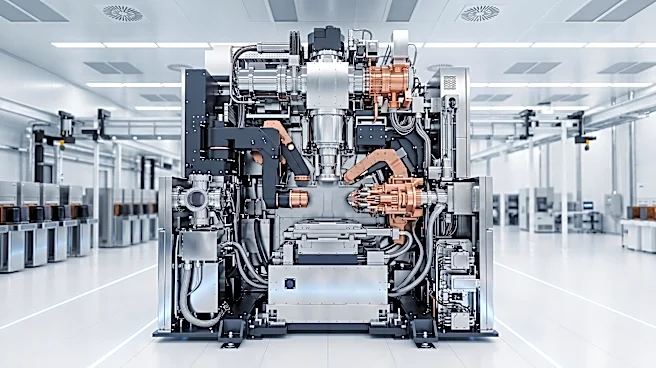
While packaging and memory are severe chokepoints, one constraint sits above all others, defining the absolute ceiling for the entire advanced semiconductor industry. It is not a material or a factory, but a machine: the Extreme Ultraviolet (EUV) lithography tool. Every single advanced AI chip in the world is made using these machines, which are responsible for printing the impossibly small circuits onto silicon wafers. And only one company in the world makes them: ASML, based in the Netherlands. Each EUV machine is a marvel of engineering, costing hundreds of millions of dollars and taking over a year to build and install. The number of AI chips the world can produce is fundamentally capped by how many of these machines ASML can ship per year. The company is so inundated with demand that it has reportedly stopped taking some orders for 2029 and 2030, and has confirmed it cannot meet projected demand through 2028. This single-supplier dependency makes the entire AI buildout reliant on the output of one company's factory floors.
The Wildcard: Geopolitics and Power Grids
Beyond the manufacturing floor, two systemic risks loom large. The first is geopolitics. The semiconductor supply chain is highly concentrated in East Asia, particularly Taiwan. Rising international tensions, trade restrictions, and export controls on chipmaking technology are increasingly politicizing the industry. Policies like the CHIPS Act in the U.S. are a direct response, aiming to build more resilient, domestic supply chains, but this process will take many years and trillions in investment. The second wildcard is more foundational: energy. AI data centers are fantastically power-hungry. The infrastructure needed to power them—from massive grid transformers to on-site gas turbines—is facing its own supply constraints with lead times stretching for years. Ultimately, you can't run an AI chip without electricity, and securing enough power is becoming a primary bottleneck for deploying AI at scale.