







Cryptography's Need for Speed
Before we get into the drama, let's set the stage. By the 1980s, public-key cryptography was a game-changer, but the dominant method, RSA, had a drawback: its keys were getting long and computationally expensive. As computing moved to smaller, less powerful
devices, from early smart cards to the eventual explosion of mobile phones, a more efficient solution was needed. In 1985, mathematicians Neal Koblitz and Victor Miller independently proposed using the esoteric world of elliptic curves to build a new kind of cryptosystem. The core appeal of ECC was its incredible efficiency. It could provide the same level of security as RSA but with much smaller key sizes. A 256-bit ECC key, for example, offers comparable security to a 3072-bit RSA key. For devices with limited processing power and battery life, this wasn't just an improvement; it was a revolution, making strong security practical for a new generation of technology.
Enter the Standards, and the Suspicions
A brilliant algorithm is one thing; getting everyone to use it is another. For widespread adoption, ECC needed to be standardized. This is where the U.S. National Institute of Standards and Technology (NIST), with heavy involvement from the National Security Agency (NSA), stepped in. The NSA's role has always been a source of tension in the cryptography community. The agency is tasked with both breaking codes (signals intelligence) and protecting them (information assurance). This dual mandate creates an inherent conflict of interest. In the late 1990s and early 2000s, NIST, with the NSA's guidance, published a set of standardized curves, such as the widely used P-256. For a time, this was the accepted norm. Then came the Edward Snowden revelations in 2013, which cast a dark shadow over the entire process.
The Backdoor in the Other Algorithm
The Snowden leaks confirmed a long-held fear among cryptographers: the NSA had intentionally weakened a cryptographic standard. The culprit was not ECC itself, but a random number generator called Dual_EC_DRBG, which was also standardized by NIST. It was slow and inefficient, but the NSA championed it. Researchers later showed that the algorithm's design contained what amounted to a backdoor. The standard used specific numerical constants whose origins were never explained. It turned out that if you knew a secret number related to those constants, you could predict the "random" output of the generator, completely breaking the security of any system that relied on it. The NSA had allegedly paid security company RSA $10 million to make this flawed algorithm the default in some of its products. This bombshell shattered trust in NIST and the NSA's role in standardization.
The 'Nothing Up My Sleeve' Problem
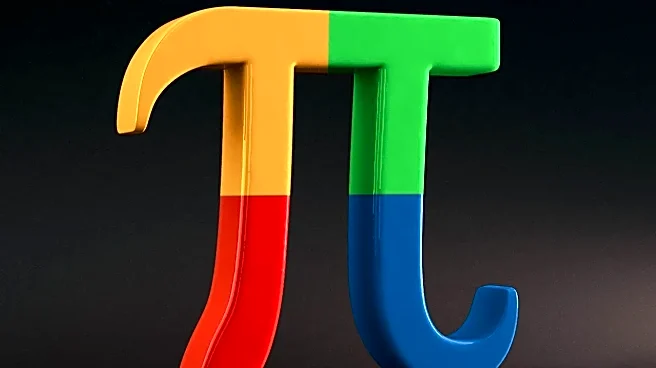
The Dual_EC_DRBG scandal immediately put the NIST-standardized elliptic curves under a microscope. The core issue was the same: the parameters for curves like P-256 were generated from a seemingly random "seed" number provided by the NSA, with no public explanation for how that seed was chosen. Cryptographers prefer constants that are derived in a transparent and obvious way—for example, from the digits of Pi. These are called "nothing up my sleeve" numbers, because the process demonstrates that the designer couldn't have hidden a secret weakness. The NIST seeds had no such justification. While two decades of intense public scrutiny have never revealed a flaw in the P-256 curve itself, the suspicion remains. Was it possible the NSA knew of a subtle weakness in a certain type of curve and simply kept generating seeds until they found one? We still don't know. The creator of the seeds, a former NSA employee named Jerry Solinas, has said they were generated from a humorous message, but that the exact message and hashing process have been lost to time.