







Why Your Charming Old House Hates Wi-Fi
Before comparing routers, it helps to know your enemy: your walls. Unlike modern homes with relatively thin drywall, older houses are often built like fortresses. Materials like thick plaster and lath, brick, stone, and even concrete are fantastic for character
and durability but are notorious Wi-Fi signal killers. These dense materials don't just weaken the radio waves coming from your router; they absorb and reflect them. Plaster walls, in particular, sometimes contain a metal mesh that acts like a shield, effectively blocking signals from passing through. So, when your Wi-Fi drops the second you walk into the kitchen, it's not your router's fault alone. It’s fighting a battle against the very materials that make your home unique.
The Old Guard: A Single-Point Shout
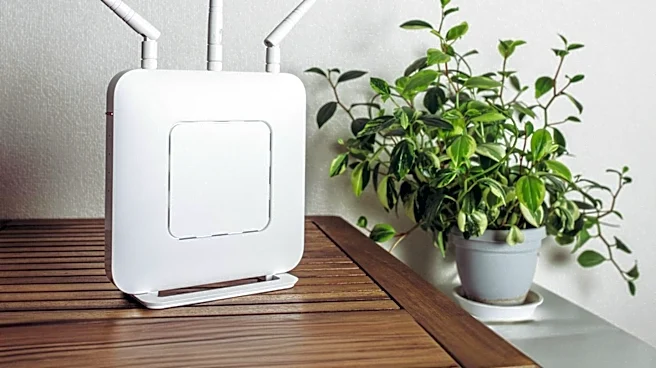
A traditional router operates on a simple design philosophy: broadcast from a single, powerful point. Think of it as a lighthouse or a person standing in the center of your home and shouting. The closer you are, the clearer the message. As you move farther away or behind a thick wall, the 'shout' becomes fainter until it's just a whisper or completely inaudible. This single-point system works perfectly well in smaller, open-plan spaces like apartments or modern homes with thin walls. However, in a larger, multi-story house with signal-blocking materials, that single shout can't penetrate everywhere. The router might be powerful, but its signal degrades significantly with every obstacle it has to cross, leading to the frustrating dead zones in a back bedroom or basement office.
The Modern Solution: A Wi-Fi Relay Team
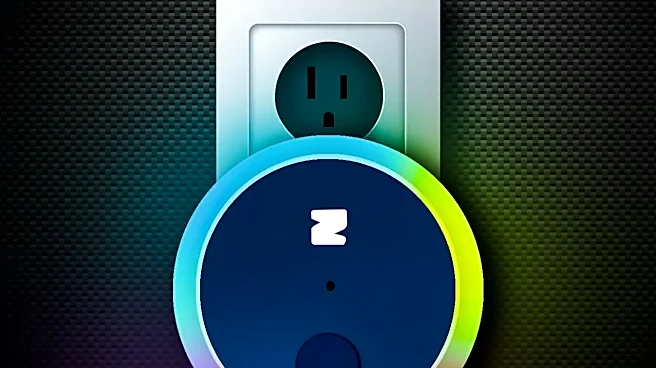
A mesh system was designed to solve the exact problem the traditional router could not. Instead of one person shouting, imagine a team of people forming a relay. The main router (or 'node') connects to your modem and passes the internet signal to the next node, which then passes it to the next, and so on. These nodes are placed strategically around your home, blanketing the entire space in a single, unified network. As you move through the house, your phone or laptop seamlessly hands off from one node to the next without you ever noticing. It’s a distributed system designed for coverage and consistency, rather than raw power from a single spot. This is the fundamental design difference.
From Brute Force to Smart Coverage
Here's the real reason for the design divergence: strategy. The traditional router's design is based on a brute-force approach—push out the strongest signal possible from one spot and hope it reaches everywhere. For years, this was the only option. Mesh systems, however, were engineered with a strategy of smart coverage. They acknowledge that thick walls are often impossible to punch through effectively. So, instead of fighting the walls, they go around them. By creating multiple access points, a mesh network builds a web of connectivity that bypasses obstacles and delivers a strong signal to the areas that need it most. It was designed specifically for the complex layouts, multiple floors, and signal-blocking construction found in older and larger homes—scenarios where the single-point model consistently fails.
So, Which One Is Right for You?
For a small apartment or a single-story home with an open layout, a powerful, modern traditional router is often sufficient and more affordable. But if the headline of this article resonated with you—if you live in an old house with thick plaster, brick, or stone walls, multiple floors, and frustrating dead zones—a mesh system is almost certainly the superior choice. It wasn't just designed to be a newer version of a router; it was designed from the ground up to solve the exact coverage problems that your home presents. While the upfront cost is higher, the benefit is a consistent, reliable connection in every room, finally ending the battle between your Wi-Fi and your home's historic charm.