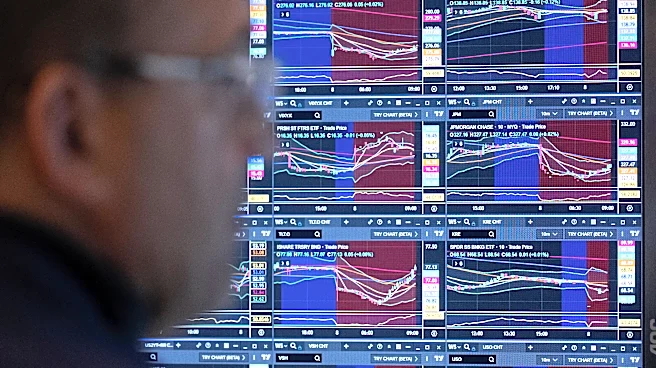

The Old World: Waiting on Data Batches
Not long ago, data processing worked a lot like a newspaper press. Information was collected all day, but you had to wait for the 'nightly run' to process it all in a big chunk, or 'batch'. This was fine
for things like weekly sales reports, but it was far too slow for a world that was becoming increasingly interactive. By the time you processed a batch of potential credit card fraud, for instance, the damage was already done. This method, known as batch processing, was reliable for huge volumes of historical data but created a significant delay, or latency, between an event happening and a business being able to react to it. The digital world was moving faster than its data infrastructure could keep up.
A New Flow: The Rise of Stream Processing
Apache Flink, which became a top-level Apache project in 2014, offered a radically different approach. Instead of treating data like a series of still ponds to be collected and analyzed later, Flink treats it as a continuously flowing river. This is stream processing: analyzing data in motion, as it happens. Flink was designed from the ground up to be a distributed processing engine for 'stateful computations over unbounded data streams'. In simple terms, it was built to handle endless, always-on data flows and perform complex calculations at massive scale with very low latency. This wasn't just about making batch processing faster; it was a completely different paradigm, akin to swapping a daily newspaper for a live news feed.
Beyond Speed: Flink’s Secret Sauce
What truly set Flink apart was its mastery of 'stateful' processing. 'Stateless' processing is simple: it looks at one piece of data at a time, like a single credit card swipe. Stateful processing, however, remembers the context and history of events. It can track a user's entire journey through a website, monitor a financial transaction across multiple steps, or calculate a 5-minute rolling average of sensor data. Flink manages this 'state' reliably, even in the case of system failures, guaranteeing accuracy. This was a game-changer. It allowed developers to build sophisticated, event-driven applications that could understand sequences and patterns, not just isolated data points. This capability to manage state at scale is why global companies like Netflix, Uber, and Lyft adopted Flink to power core business logic, from dynamic pricing to real-time recommendations.
The Real-World Reshaping
So how did this reshape software? By making real-time the default expectation. With Flink, developers were no longer limited to the store-then-analyze model. They could build applications that react intelligently in the moment. A bank's fraud detection system could now block a transaction in milliseconds. An e-commerce site could update inventory and user recommendations instantly. A logistics company could optimize routes based on live traffic data. Flink provided the tools for data engineers, scientists, and analysts to build these reactive systems. It gave them a robust, scalable framework to handle the firehose of data from mobile apps, IoT devices, and online services, turning that raw data into immediate, actionable insights that drive business decisions. The shift was from building applications that reported on the past to building applications that could shape the present.