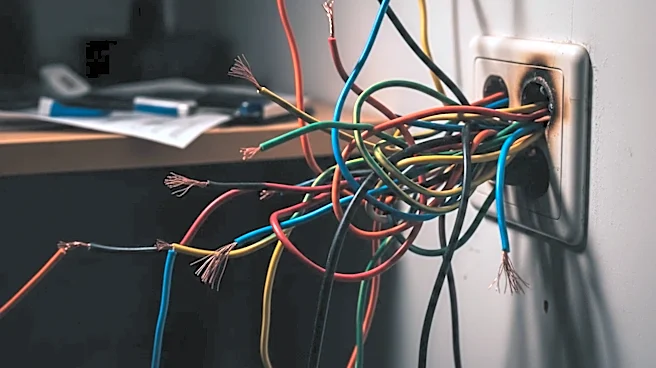










The Seductive, Simple Promise
The idea behind powerline networking is brilliant in its simplicity. You take two adapters, plug one into an outlet near your router and connect it with an Ethernet cable, then plug the second adapter into any other outlet in your house for an instant
wired connection. The adapters turn your home’s existing electrical wiring into a giant network cable, sending data over high-frequency signals that ride alongside the normal electrical current. For anyone who has battled with Wi-Fi dead zones in a basement, a distant home office, or a backyard shed, this technology feels like a miracle. No drilling holes, no running unsightly cables, just plug-and-play stability. It’s often marketed as the perfect middle ground between flaky Wi-Fi and the hassle of installing Ethernet.
The Messy Reality of Home Wiring
Here’s the catch that trips everyone up: your home's electrical wiring was never designed to carry data. It was built for one purpose: delivering power at a low frequency. Powerline adapters work by piggybacking a high-frequency data signal onto this system. But that system is a chaotic and noisy environment. An engineer might envision a clean, simple circuit, but most homes, especially older ones, are a patchwork of different circuits, breakers, and wiring of varying ages and quality. The signal from a powerline adapter may struggle to cross from one circuit breaker to another. In many U.S. homes with split-phase power, outlets in different rooms may be on entirely different electrical phases, making it nearly impossible for the adapters to communicate effectively. What looks like a simple path on paper is actually a complex maze full of potential dead ends.
The Noisy Culprits Hiding in Plain Sight
Even if your wiring is perfect, your appliances are likely working against you. Many modern electronics use switching power supplies—found in everything from phone chargers to televisions—which can introduce high-frequency “noise” onto the electrical lines. This noise can interfere with and degrade the powerline data signal. Other major culprits are appliances with motors or compressors, like refrigerators, air conditioners, and even some washing machines. Turning on a microwave or a vacuum cleaner can suddenly cause your internet speed to plummet or drop entirely. Surge protectors and power strips are another common point of failure; their built-in filtering mechanisms often interpret the powerline data signal as noise and block it, killing the connection. This is why instructions insist you plug adapters directly into the wall.
Why the Experts Get It Wrong
A senior engineer’s expertise can become a blind spot. They are trained to think in terms of ideal systems and predictable variables. They might test a pair of adapters in the same room, see them work perfectly, and assume the system is sound. But they aren't accounting for the unpredictable chaos of a real-world home environment. They aren't thinking about the cheap phone charger plugged into the guest room, the old wiring in the attic, or the fact that the home office is on a separate circuit from a previous renovation. Powerline networking isn't a pure networking problem; it’s an electrical, environmental, and architectural problem rolled into one. The performance isn’t a fixed value but a fluctuating state that depends on which lights are on and what your neighbor is doing. This variability is what makes it so maddeningly unreliable and a gamble in almost any home.