







First Off, What's an FPGA?
FPGA stands for Field-Programmable Gate Array. Think of a standard processor (CPU) as a master chef with a fixed kitchen layout—it can cook many different recipes, but it has to follow a set sequence using the tools available. A GPU is like having hundreds
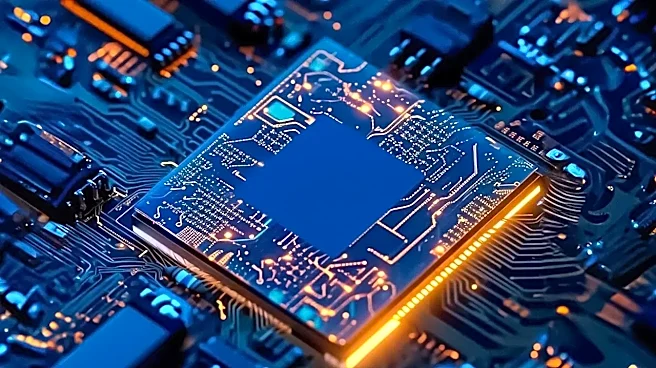
of specialized sous chefs who are great at doing one simple task, like chopping, over and over in parallel. An FPGA, however, is like a kitchen made of LEGOs. You can build it into any configuration you want. It’s not a processor that runs software; it's a blank chip of programmable hardware blocks that you can configure to become almost any digital circuit you can imagine. This is done using a hardware description language (HDL), which literally describes the hardware you want to create.
The Pro-FPGA Camp: Unmatched Speed and Flexibility
Engineers who champion FPGAs are typically focused on one thing: performance at all costs. Because FPGAs are configured at the hardware level, they can perform tasks with incredible speed and parallelism, executing many operations simultaneously. This makes them ideal for applications where every microsecond counts, such as high-frequency trading in finance, real-time medical imaging, 5G telecommunications infrastructure, and military guidance systems. The core argument is that for certain problems, writing software on a general-purpose CPU is too slow. An FPGA allows an engineer to build a custom hardware accelerator tailored perfectly to the task. This results in extremely low latency—the delay between input and output—because there's no operating system or software layer getting in the way. It’s pure, task-specific hardware, and you can even reprogram it in the field if your needs change.
The Anti-FPGA Camp: Crippling Complexity and Cost
On the other side of the aisle are engineers who see FPGAs as a resource-draining nightmare. Their primary complaint is the staggering complexity. Programming FPGAs requires deep knowledge of hardware description languages like Verilog or VHDL, a skill set far rarer and more difficult to acquire than traditional software programming. The development cycle is notoriously slow, involving lengthy simulation, synthesis, and place-and-route processes that can take hours or even days for complex designs. Furthermore, the tools themselves are often seen as archaic and cumbersome compared to modern software development environments. Then there's the cost. High-performance FPGAs can be incredibly expensive, sometimes costing thousands of dollars per chip. While they're great for prototyping, if a product goes into high-volume manufacturing, it's often more economical to design a custom, fixed-function chip (an ASIC), which negates some of the FPGA's purpose.
It's a Philosophical and Business Divide
Ultimately, the disagreement among senior engineers isn't just about technical specs; it's a clash of engineering philosophies and business strategies. The pro-FPGA engineer often prioritizes peak performance and custom solutions for niche, high-value problems where speed is the dominant metric. They see the high development cost as a necessary investment for achieving capabilities that are impossible with off-the-shelf hardware. The anti-FPGA engineer, however, often prioritizes speed of development, cost-effectiveness, and maintainability. They argue that for most applications, the performance gains from an FPGA don't justify the massive increase in project timelines, budget, and the need for highly specialized, expensive talent. They believe in leveraging the vast ecosystems of CPUs and GPUs, where talent is plentiful and development is faster, even if it means sacrificing some raw performance.