









First, What Is ‘Capex’?
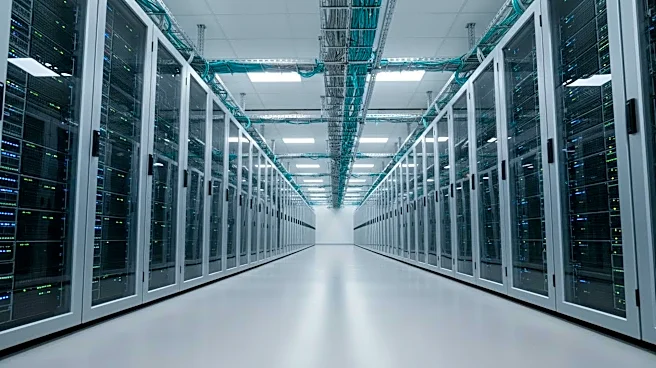
Before diving into the mistakes, let's clarify what we're talking about. Capital expenditure, or Capex, is the money a company spends on physical assets that will provide value for years to come. Think buildings, land, and, crucially for Meta, computer
servers and data centers. This is different from operating expenses (Opex), which are the day-to-day costs of running a business, like salaries and marketing. For a company like Meta, Capex isn't just a cost; it's a direct investment in its future capabilities. The servers it buys today will power its apps, train its AI models, and host its metaverse ambitions for years. Confusing this long-term investment with a simple quarterly expense is the first step toward misreading the company's entire strategy.
Why Meta Spends Like a Tech Superpower
Meta’s Capex figures are staggering. The company has guided spending for 2026 to a range of $125 billion to $145 billion, a figure that has sent shivers down some investors' spines. After a Q1 earnings report where it raised this guidance, the stock dropped over 8% despite strong revenue growth. So where is all this money going? The primary driver is the global artificial intelligence arms race. To build and run advanced AI models—the kind that power everything from your Instagram feed's recommendations to the new Meta AI assistant—requires immense computational power. That means buying tens of thousands of specialized processors (GPUs) and building massive data centers to house them. This is the infrastructure behind Mark Zuckerberg’s vision of “personal superintelligence.” A secondary, but still significant, sink for this capital is Reality Labs, the division building the hardware and software for the metaverse, which continues to lose billions per quarter.
The Mistake Everyone Makes
The most common interpretation error is treating Capex as a simple, immediate negative. When investors see a high Capex number, they often just see a company burning cash, which pressures free cash flow and raises concerns about profitability. This short-term view is why the stock often falls when Capex guidance is increased. However, this perspective misses the entire point of the investment. For Meta, the spending isn't a bug; it's the core feature of its strategy. Unlike a company spending on a new corporate headquarters, Meta's infrastructure spending is directly tied to future product performance and revenue. As one analyst put it, these investments are generally “underappreciated by investors.” The market often punishes Meta for the spending, while simultaneously overlooking the fact that this very spending is what fuels the impressive ad revenue growth it also demands.
How to Interpret the Signals Correctly
A smarter way to analyze Meta's Capex is to view it not as a cost, but as a leading indicator of future growth. The real questions aren't just "how much?" but "what for?" and "what's the return?" Analysts note that the AI spending is already showing up in the bottom line, with Q1 2026 revenue accelerating 33% year-over-year thanks to AI-driven improvements in ad targeting and user engagement. Instead of panicking over the headline number, sophisticated investors look at the efficiency of that spending. Are the investments improving the core ad business? Yes, as evidenced by a 19% increase in ad impressions and a 12% rise in average price per ad in Q1 2026. Is Meta finding clever ways to finance this, like a recent joint venture with BlackRock for a new data center? This context provides a far more accurate picture than a knee-jerk reaction to a multi-billion-dollar figure.