




A Greenhouse on Mars
The story of SpaceX begins not with a grand plan to build rockets, but with a surprisingly modest goal: to put a small, automated greenhouse on Mars. Fresh off the sale of PayPal, Elon Musk was frustrated by the lack of public excitement and government
progress toward space exploration. His idea, dubbed "Mars Oasis," was to send a small lander to the Red Planet, have it grow a few plants, and beam back a picture of green life against the red Martian soil. The goal wasn't scientific discovery but a publicity stunt designed to inspire humanity and restart the conversation about becoming a multi-planetary species. But when Musk tried to buy refurbished Russian intercontinental ballistic missiles to launch his greenhouse, he was met with exorbitant prices and outright dismissal. On the flight home, he had a realization: the problem wasn't a lack of will, but the astronomical cost of launch vehicles. He decided he would have to build the rocket himself.
Silicon Valley Said No
Armed with around $100 million of his own money, Musk founded Space Exploration Technologies Corp. in 2002. His core pitch to potential investors was radical: drastically cut launch costs by developing reusable rockets. At the time, rockets were single-use machines, discarded after every flight. The aerospace industry, dominated by legacy government contractors like Boeing and Lockheed Martin, viewed this as a fantasy. Investors, accustomed to software startups with quick returns, saw an impossibly capital-intensive business with an insane level of technical risk. The idea of a private company, led by an internet entrepreneur, building rockets from scratch and competing with billion-dollar incumbents was widely seen as a recipe for bankruptcy. The investor community, by and large, passed on the opportunity, leaving Musk to fund his seemingly doomed venture almost entirely on his own.
Failure, Failure, and More Failure
Building rockets proved even harder than anticipated. SpaceX's first rocket, the Falcon 1, was a small vehicle designed to prove their core concepts. Between 2006 and 2008, the company attempted to launch it three times from a remote island in the Pacific. All three attempts ended in catastrophic failure. The first rocket exploded seconds after liftoff due to a corroded nut. The second failed to reach orbit after an engine issue. The third was lost after a collision between the first and second stages during separation. With each explosion, millions of dollars vanished. By the third failure, both SpaceX and Musk's other major venture, Tesla, were on the verge of financial collapse. The press was writing obituaries for the company, and the initial mockery had turned into grim confirmation for outside observers.
The Flight That Changed Everything
By September 2008, Musk and SpaceX had enough money for one final attempt. A fourth failure would have meant the end of the company. On September 28, the Falcon 1 launched for the fourth time. This time, it performed flawlessly, successfully reaching orbit and making SpaceX the first privately-funded company to ever achieve the feat with a liquid-fueled rocket. That single success changed everything. It proved the company's technology and resilience. Just a few months later, SpaceX was awarded a landmark $1.6 billion contract from NASA to fly cargo to the International Space Station, providing the critical funding and validation the company needed to survive and scale. The mocked idea was now a serious player in the aerospace industry.
Making the Impossible Routine
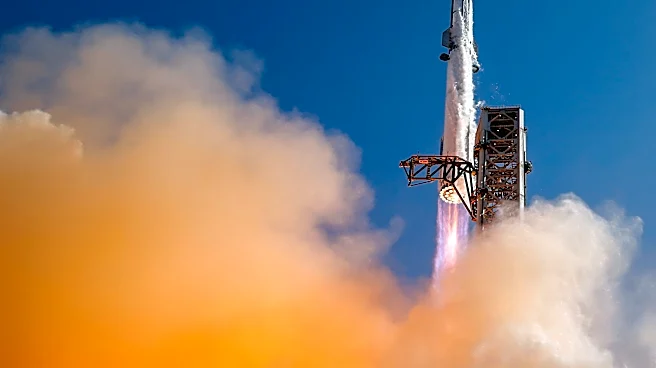
With the Falcon 9 rocket, the successor to the Falcon 1, SpaceX began to fully realize its founding vision. After years of spectacular, fiery failures during landing attempts, the company successfully landed an orbital-class first-stage booster in December 2015. Soon, landing rockets on land and on autonomous drone ships at sea became routine. This achievement, once considered impossible by industry veterans, fundamentally broke the economics of spaceflight. By reusing the most expensive part of the rocket, SpaceX could offer launches for a fraction of the cost of its competitors, completely upending the global launch market. The company that started with the simple idea of growing a plant on Mars had now rewritten the rules of the entire industry.