






What a Multi-Trillion-Dollar Company Really Is
Before diving into the history, let's wrap our heads around that number. A company's market capitalization, or 'market cap,' is simple math: it's the total value of all its publicly traded shares. For Alphabet, this figure hovers in the trillions, placing
it in an exclusive club of the world's most valuable companies. To put that in perspective, a valuation of over four trillion dollars is larger than the entire economy of most countries on Earth. It's a testament to immense financial power, investor confidence, and a business model that prints money with breathtaking efficiency. This value didn't appear overnight; it was built on a foundation laid in the early, chaotic days of the internet.
The Wild West of Early Web Ads
Cast your mind back to the late 1990s. The internet was a digital frontier, and advertising was its original sin. The prevailing model was borrowed from print and television: interruption. Websites were cluttered with flashy, distracting banner ads and aggressive pop-ups that users actively despised. This approach was not only annoying but also wildly inefficient. Advertisers paid for impressions—simply showing the ad—with little idea if they were reaching the right people. Even Google's founders, Larry Page and Sergey Brin, were initially skeptical of an ad-funded model, believing it was inherently biased and worked against the user's best interests.
The 'Single Decision' That Changed Everything
The pivotal moment came in October 2000 with the launch of Google AdWords (now Google Ads). This wasn't just another ad product; it was a philosophical revolution. The idea—heavily influenced by Bill Gross's GoTo.com, which pioneered paid search—was to make ads useful. Instead of disruptive banners, AdWords offered simple, text-based "Sponsored Links" that were directly relevant to a user's search query. If you searched for "running shoes," you saw ads for running shoes. It was advertising as an answer, not an interruption. Initially, advertisers paid per thousand impressions, but the true masterstroke came in 2002 when Google switched to a cost-per-click (CPC) auction model. Advertisers only paid when someone was interested enough to click, and a new 'Quality Score' meant that relevance could beat a bigger budget. This was the decision that built the empire.
An Engine That Funded an Entire Universe
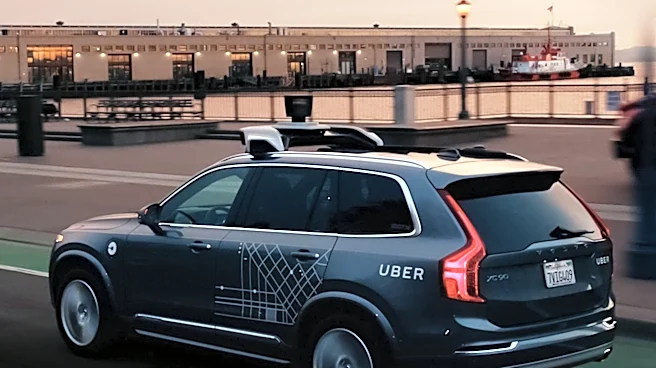
The AdWords model proved to be the most profitable advertising machine in history. Its self-serve nature allowed businesses of any size to participate, creating a massive, scalable auction for user attention. The revenue it generated was staggering, providing the financial fuel for nearly every other Google project that followed. That cash flow is what allowed the company to develop Gmail, create Google Maps, acquire YouTube for what now seems like a bargain, and build the Android operating system. It funded the 'moonshot' projects in self-driving cars (Waymo) and life sciences (Verily). Without the quiet, efficient engine of search advertising humming in the background, Google would have remained a one-trick pony—a great search engine with no path to becoming the global force it is today.