






The Digital Shipping Container
First, let's talk about the building block of this revolution: the container. Imagine you're trying to run a piece of software. In the old days, it was like building a model train set. You needed the right track (operating system), the right power supply
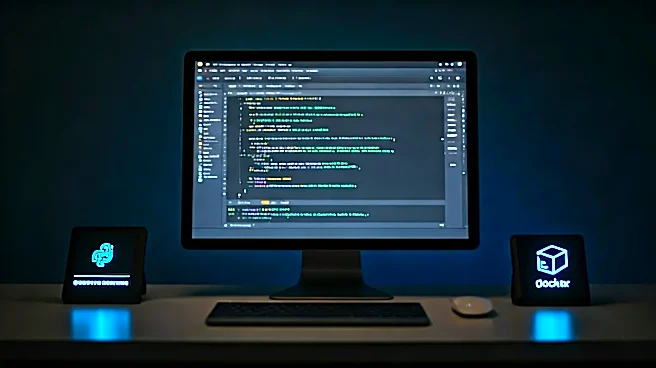
(libraries), and the right engine (the app itself). If you moved it to a friend's house with a different track, it might not work. A software container solves this. It’s like a standardized shipping container. It doesn't just hold the cargo (the app); it includes a small piece of the road, the power lines, and everything else it needs to function. A developer can package their application inside one of these digital boxes, and it will run consistently anywhere—on their laptop, on a company’s server, or in the cloud. This simple idea, popularized by a technology called Docker, made software portable and predictable for the first time.
The Problem of a Million Boxes
This new portability was great, but it created a new problem: scale. What happens when your simple app becomes a global phenomenon like Netflix or Spotify? You don't just need one container; you need thousands, or even hundreds of thousands, all working together across a global network of servers. Suddenly, you have a massive logistics challenge. If a server in Virginia crashes, which containers were on it? How do you restart them somewhere else instantly so users don’t notice? If a million people suddenly log on to watch a season finale, how do you deploy hundreds of new containers to handle the load, and then shut them down when the traffic subsides to save money? Doing this manually would require an army of engineers working 24/7. It’s simply not feasible.
Enter the Digital Port Authority
This is where container orchestration comes in. Think of it as the brain of a massive, automated shipping port. The most dominant orchestration system, called Kubernetes, acts as the port authority. It was originally developed by Google to manage its own colossal infrastructure and later released as an open-source project. Kubernetes doesn't care about the contents of each container. Its job is to manage the fleet. It automates all the hard work: scheduling containers onto servers with available capacity, monitoring their health, and automatically replacing any that fail. It’s the traffic cop that directs user requests to healthy containers. It's the resource manager that scales services up or down based on demand. This automated management is the “orchestration” that allows a small team of engineers to run a massive, complex application that serves millions of people without constant manual intervention.
Why It Powers Your Daily Life
This invisible layer of automation is the reason your favorite apps feel so reliable. When you open your banking app, orchestration ensures the service is always on, secure, and responsive. When a new feature is released for a social media app, developers can roll it out seamlessly, updating one container at a time without taking the whole service offline. For companies, this isn't just a technical convenience; it's a competitive advantage. It allows them to innovate faster, respond to market changes, and survive massive, unpredictable events like Black Friday shopping spikes or viral news moments. They are no longer limited by physical servers but by the elegance of their software logistics. From e-commerce sites to streaming platforms and the backend systems that process your credit card payments, this quiet system of digital organization is the unsung hero of the modern internet.