



The Ghost in the Supercomputer
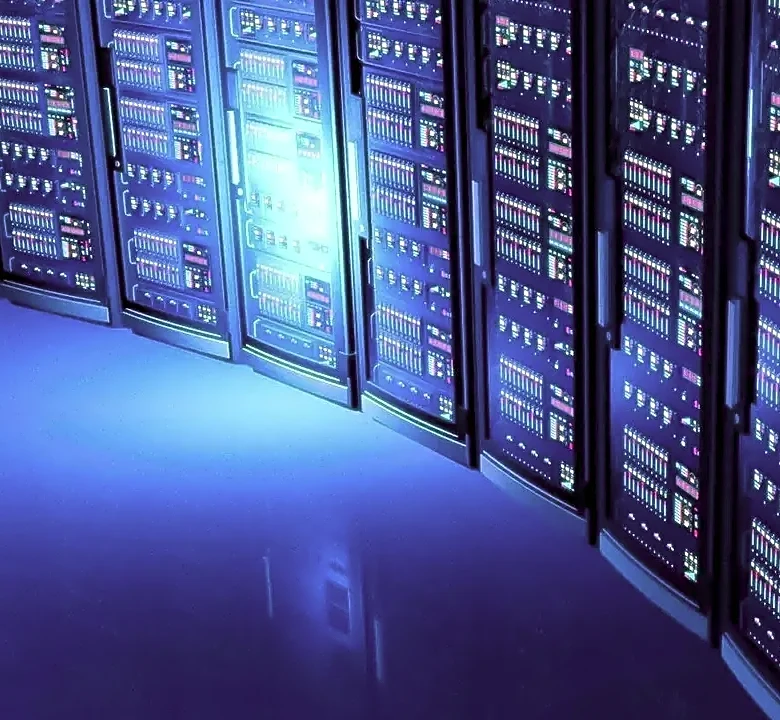
While many developers work with languages like Python or JavaScript, Fortran remains a dominant force in a critical, high-stakes domain: high-performance computing (HPC). It's the language used to benchmark and rank the world's fastest supercomputers.
This is because Fortran was designed from the ground up for one thing: crunching numbers with incredible speed and efficiency. Its design allows compilers to create highly optimized code for mathematical operations, particularly on large, multi-dimensional arrays. This makes it the go-to language for some of the most computationally intensive tasks on the planet, like numerical weather prediction, climate modeling, and complex physics simulations.
From Launchpads to Trading Floors
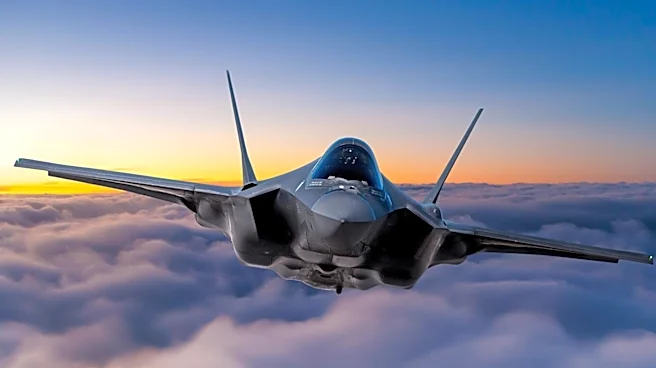
Fortran’s influence extends far beyond academic research and weather forecasts. The aerospace and defense industries rely heavily on it for applications where failure is not an option. It's used in computational fluid dynamics to model airflow over a wing, in flight simulations, and for designing propulsion systems. Major defense and aerospace companies like Northrop Grumman, Lockheed Martin, and Boeing still utilize Fortran. In a more surprising turn, the financial services industry also employs Fortran for quantitative analysis and risk modeling, where complex mathematical models must be processed quickly and accurately to inform trading decisions.
Why Not Just Rewrite Everything?
The natural question is why these industries don't just migrate to more modern languages like C++ or Python. The answer is twofold: performance and legacy. Firstly, in array-heavy numerical tasks, Fortran can still outperform even highly optimized C code. The language has fewer abstraction layers, which allows the compiler to generate exceptionally fast machine code. Secondly, decades of investment are baked into existing Fortran codebases. These aren't just old scripts; they are massive, validated, and peer-reviewed libraries and applications that form the bedrock of entire fields. Rewriting them in a new language would be enormously expensive, time-consuming, and introduce the risk of new, undiscovered errors.
A Language That Keeps Evolving
The Fortran of today is not the same as the one from the 1950s. The language has undergone steady evolution, with modern standards (like Fortran 2008 and 2018) introducing features common in other languages, such as object-oriented programming, better interoperability with C, and native support for parallel computing. This allows developers to use modern programming styles while maintaining backward compatibility, ensuring that code written decades ago can still run. This evolution has allowed Fortran to bridge the gap between legacy systems and modern hardware, enabling it to run efficiently on everything from a single desktop to a distributed supercomputer.