





It's Not About Code Purity, It's About Money
Let's get one thing straight: senior engineers don't advocate for complex architectural patterns because they enjoy making things complicated. They do it because they've seen what happens when you don't. They've lived through the 'Frankenstein' projects—systems
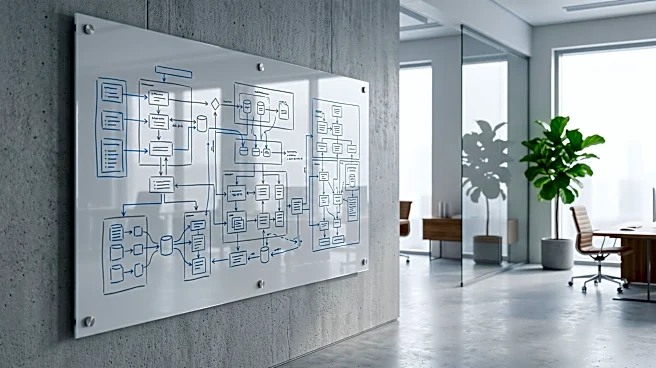
so tangled and brittle that fixing one bug creates three more. Every late-night emergency deployment, every delayed feature launch, and every new hire who takes six months to become productive is a direct cost to the business. Clean Architecture is, at its heart, a risk mitigation strategy. It’s a way of building software that anticipates change. The core principle is simple: separate the critical business rules from the technical details like databases, frameworks, and user interfaces. This means the code that defines how your business actually operates isn't dependent on the technology you happen to be using today.
The Hidden Tax of 'Fast and Dirty' Code
In the early days of a project, speed is everything. The pressure is on to get a product to market, and taking shortcuts feels like a necessary evil. This creates 'technical debt'—the implied cost of rework caused by choosing an easy solution now instead of using a better approach that would take longer. A junior developer sees the immediate win: the feature is live. A senior developer sees the long-term tax. They know that a messy codebase acts like a financial drag on the company. Every new feature takes longer to build, testing becomes a nightmare, and the system becomes difficult to scale as the user base grows. Clean Architecture is a tool to manage that debt proactively. By creating clear boundaries between different parts of the application, it allows teams to make changes and add features without breaking unrelated functionality. You can swap out your database, redesign your user interface, or integrate a new payment provider without having to rewrite your core business logic. That's not just a technical win; it's a massive competitive advantage.
Building a Team, Not Just a Product
A codebase is a shared workspace. A confusing, disorganized one slows everyone down. When a new engineer joins a project built with clean principles, the question of 'where does this code go?' has a clear answer. The structure of the application itself serves as a guide, making it faster for new team members to contribute meaningfully. This dramatically reduces onboarding costs and improves team velocity. Senior engineers, who often take on mentorship roles, understand that their responsibility extends beyond just writing code. They are building a system that other people will have to maintain for years to come. A clean architecture is an act of consideration for future team members. It creates a sustainable development environment where the team can grow and the product can evolve without collapsing under its own weight. It prevents the all-too-common scenario where one or two 'hero' engineers are the only ones who understand how to fix critical parts of the system.
Future-Proofing the Business Logic
Technology changes at a relentless pace. The hot new framework of today is the legacy system of tomorrow. Senior engineers have seen this movie before. They know that tying your core business rules directly to a specific technology is a recipe for disaster. What happens when your cloud provider changes its API, or a new, more efficient database technology emerges? In a poorly structured application, these changes can trigger a complete, and costly, rewrite. With Clean Architecture, the business logic is isolated and independent. The core of your application—the rules that make your business unique—doesn't know or care if its data comes from a SQL database or a text file, or if it's being displayed on a web page or a mobile app. This separation allows the business to adapt and evolve. It’s the difference between building a house on a solid foundation versus building it directly on shifting sand.