










The Unbreakable AI King
To understand the shock, you first have to understand the euphoria. NVIDIA, the company whose chips power the artificial intelligence revolution, wasn't just a hot stock; it was a phenomenon. Propelled by staggering demand for its AI hardware, the company's
value soared. It blew past the $1 trillion mark, then $2 trillion, and for a fleeting moment in mid-2024, it briefly eclipsed Microsoft to become the most valuable company in the world at over $3.3 trillion. Wall Street loved the story. Analyst ratings were a sea of green 'Buy' recommendations, with price targets constantly being revised upward. The narrative was simple and powerful: AI is the future, and NVIDIA is selling all the shovels in the gold rush. This wasn't just optimism; it was a consensus that felt as solid as concrete. The question among investors wasn't *if* NVIDIA would rise, but by how much.
A Half-Trillion Dollar Haircut
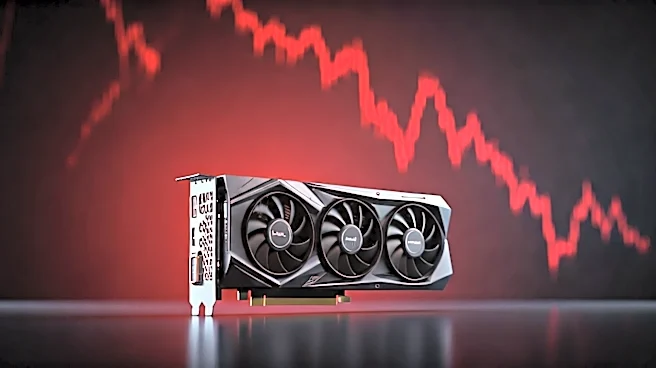
Then came the correction. In just three trading days in late June 2024, NVIDIA's stock plunged nearly 20% from its peak. This wasn't a slow leak; it was a sudden, violent drop that vaporized approximately $430 billion in market value. That’s more than the entire valuation of most companies on the planet, erased in 72 hours. For context, the sheer amount of value lost was larger than the entire market cap of companies like Johnson & Johnson or JPMorgan Chase. The speed was breathtaking. After months of an almost vertical ascent, the stock was suddenly in freefall. To investors who had bought into the hype at its peak, it was a brutal reality check. The 'worst crash' wasn't the deepest in the company's history in percentage terms, but it was arguably the largest ever in terms of raw dollars lost in such a short time, cementing its place as a legendary, cautionary moment in market history.
What Sparked the Sell-Off?
There was no single 'uh-oh' moment—no disastrous product launch or shocking corporate scandal. Instead, the plunge was a textbook example of how market sentiment can turn on a dime. The primary driver was simple profit-taking. Investors who had ridden the stock up 1,000% or more in just a couple of years decided it was time to cash in some chips. This was amplified by reports of scheduled stock sales by company insiders, including CEO Jensen Huang, which, while routine and pre-planned, added fuel to the nervous fire. There was also a broader 'sector rotation' at play, as large institutional investors began moving money out of the high-flying tech names that had dominated the market and into cheaper, less-loved sectors like energy and financials. It was less a vote of no-confidence in NVIDIA's future and more a collective gasp for air after a breathless sprint.
Gravity, Not Failure
The key takeaway from the sell-off isn't that NVIDIA is in trouble. The company's fundamental story—its dominance in AI chips—remains largely intact. Rather, the episode is a powerful lesson in market physics. A stock that rises by hundreds of percent in a short period becomes inherently unstable. It attracts momentum traders and creates what former Fed Chair Alan Greenspan famously called 'irrational exuberance.' When a stock becomes this loved, its price is no longer just a reflection of its current business but of impossibly high future expectations. At that altitude, any hint of turbulence can cause a sudden, sharp descent. The 'crash' Wall Street said couldn't happen was simply gravity reasserting itself. It was a reminder that no stock, no matter how revolutionary the company, can go up forever without encountering resistance.