





1. The Whiplash Pivot
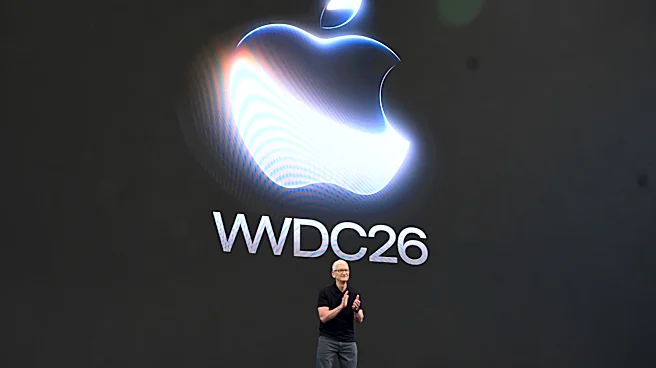
The scene is familiar: Tim Cook announces a groundbreaking new framework for, say, ambient computing. Within hours, a founder declares their social media analytics company is now an 'ambient OS pioneer.' This is a classic, hype-driven mistake. Throwing
your entire product roadmap out the window based on a 10-minute demo is a recipe for chaos. Your team gets whiplash, your existing customers feel abandoned, and you're entering a brand-new, undefined market against every other team that had the same idea. Instead of pivoting, ask: How can this new technology *enhance* our existing mission? A smart reaction is to form a small R&D team to build a prototype and explore the tech's potential. Treat it as an experiment, not a company-defining mandate dropped from the sky.
2. Building on a 'Version 1.0' API
Apple's new APIs are often exciting but notoriously buggy and incomplete in their first iteration. Remember the early days of ARKit or Widgets? Developers who went all-in immediately spent months wrestling with performance issues, unexpected limitations, and breaking changes in subsequent betas. By the time the OS officially launched, their app was either fragile or already needed a significant rewrite. Building your core business on a v1.0 API is like building a house on a foundation that's still setting. It's far wiser to build proofs-of-concept and provide Apple with feedback. Wait for the .1 or even the next major OS release, when the framework is more stable, documented, and its real-world use cases are clearer.
3. Ignoring the 'Why' Behind the Feature
Apple doesn't release technology in a vacuum. Every new feature, from the Dynamic Island to Vision Pro's spatial computing, serves a larger strategic purpose. Maybe it's to sell more hardware, deepen ecosystem lock-in, or enter a new market. Founders often make the mistake of seeing a new capability—like Live Activities—and building for the tech itself, without understanding the user problem Apple is trying to solve. This leads to features that are technically impressive but functionally useless. Users don't care that you're using a cool new API; they care that you're solving a problem for them. Before you build, ask 'What user story is Apple enabling here?' Align with that, not just the code.
4. Willfully Ignoring 'Sherlock' Potential
The term 'getting Sherlocked' exists for a reason. If your entire business is a simple, single-purpose utility—a better calculator, a slicker QR code scanner, a basic password manager—you are living on borrowed time. Every WWDC, Apple integrates dozens of these functions directly into the OS. The mistake is not just building a Sher-lockable feature, but failing to build a defensible moat around it. A standalone app for transparent widgets was a great idea... until Apple built it themselves. If you're in this space, your only defense is to go deeper. Add community features, offer cross-platform sync, integrate with professional workflows, or build a trusted brand. A feature can be copied; a loyal user base and a unique value proposition are much harder to replicate.
5. Confusing the Keynote Demo with Reality
The on-stage demos at WWDC are masterpieces of theater. They are filmed in perfect conditions, run on pristine hardware, and follow a flawless script. They are designed to sell a vision, not reflect messy reality. A founder might see a seamless augmented reality demo and assume millions of users will be interacting with the world that way by Christmas. This rarely happens. Adoption curves are slow, and what looks magical in a demo can be clunky and impractical in a daily commute or a busy office. Don't staff up your 'Spatial Design' team based on a five-minute video. Wait for genuine user behavior to emerge before making significant investments.
6. Forgetting the Rest of the World Exists
For a few weeks in June, the tech world can feel like it revolves entirely around Cupertino. It's tempting to divert all your engineering resources to building the ultimate new iOS 20 feature. But what about your Android users? Your web app? Your Windows clients? In the U.S. market, Android still holds a massive share. Abandoning half your potential user base to chase a shiny new Apple feature that a fraction of a fraction of iOS users will adopt in the first year is a critical error. Unless you are intentionally an Apple-exclusive boutique, maintain platform parity. The buzz from being a 'day one' WWDC app fades quickly, but the revenue from a happy, cross-platform user base is what builds a sustainable business.
7. Mistaking a Feature for a Company
This is the ultimate strategic blunder. WWDC inspires thousands of 'app ideas' that are really just 'feature ideas.' An app that lets you place virtual sticky notes on your Vision Pro is a feature. An app that syncs your grocery list to the new 'Smart Refrigerator API' is a feature. It's a cool trick, but is it a business? Does it solve a burning problem people would pay for? Does it have a path to profitability? Too many founders build a cool tech demo and then try to figure out the business model later. The successful approach is the reverse: find a real-world problem first, and then see if Apple's new tools offer a uniquely effective way to solve it.