





The Unseen Cost of Intelligence
The AI boom runs on electricity—a lot of it. Data centers powering AI are on track to double their global electricity consumption by 2030, with some projections showing AI workloads alone could consume as much power as a country like Japan. This isn't
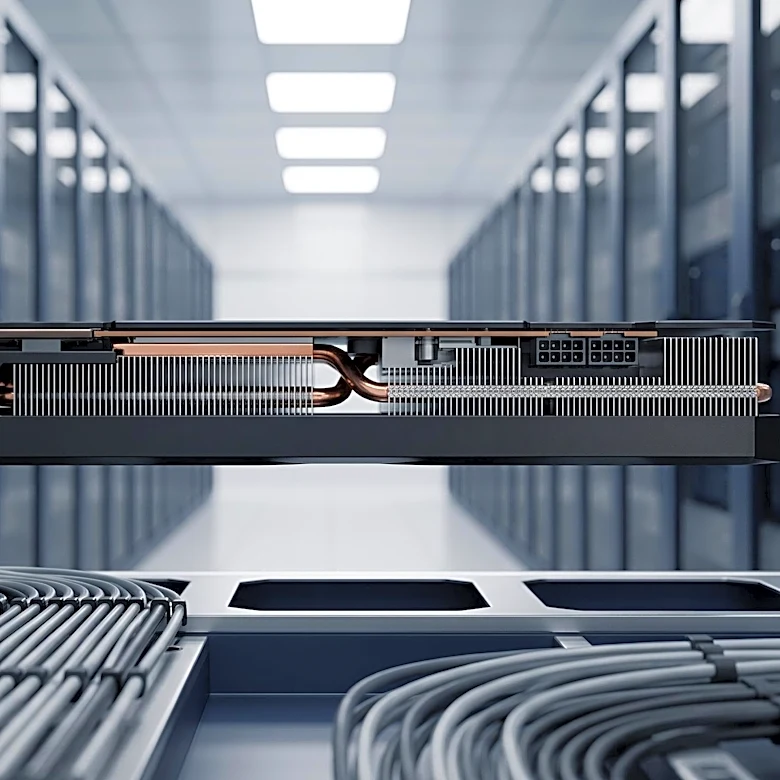
just an environmental concern; it's a fundamental business problem. The cost of electricity and the massive water usage required for cooling are becoming two of the largest operational expenses for AI companies. More importantly, many strategic locations for data centers, like Northern Virginia, are hitting a 'power wall'—the local electrical grid simply cannot supply any more power. This creates a physical limit on how much AI can be deployed, regardless of how fast the chips are.
The Old Moat: Raw Computational Power
Traditionally, the 'moat'—or sustainable competitive advantage—in AI was possessing the fastest, most powerful chips. A company with more GPUs could train bigger models faster, creating a seemingly insurmountable lead. This fueled an arms race for peak performance, where the company with the highest FLOPS (floating-point operations per second) was king. But this strategy ignored the second-order effects. Training a massive model is a one-time energy expense, but 'inference'—the process of actually using the model to generate a response to a user query—is a continuous, accumulating cost. As AI products scale to billions of users, inference is expected to account for 80-90% of the lifetime energy cost of a model. Suddenly, a model that is incredibly powerful but horribly inefficient becomes an economic anchor, not an advantage.
The New Fortress: Efficiency at Scale
This is where energy efficiency becomes the new, more durable moat. A company that can deliver the same AI result for half the power doesn't just save money on its electric bill; it gains a profound strategic edge. An efficient model allows a company to serve more users from the same power-constrained data center, deploy AI on smaller, cheaper 'edge' devices like phones and cars, and scale its services faster without waiting for new power plants to be built. A 10% improvement in energy efficiency can be the difference between a profitable AI service and one that loses money on every query. This performance-per-watt metric is now at the center of the AI competition, forcing a shift from a sprint for raw speed to a marathon for sustainable, scalable intelligence.
The Architects of the Efficient Future
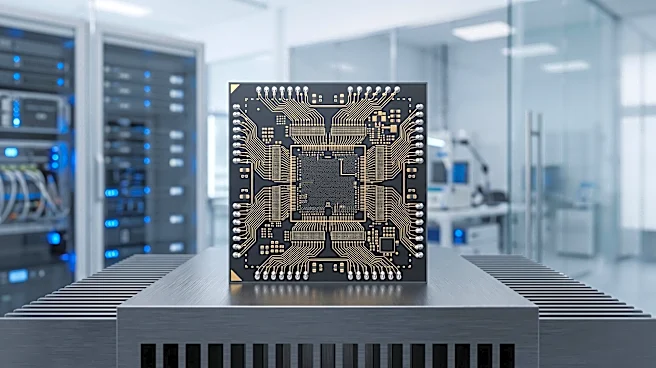
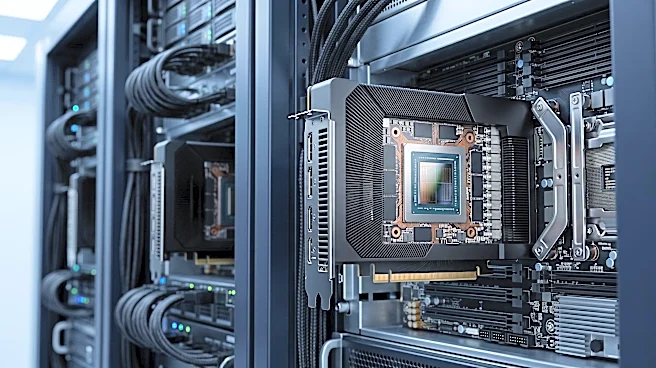
This pivot is creating a new wave of innovation. While GPU giants like Nvidia are aggressively redesigning their chips for better efficiency, a host of competitors and startups are attacking the problem from different angles. Some are creating specialized chips called AI accelerators (like TPUs, NPUs) that are purpose-built for AI tasks and can be significantly more power-efficient than general-purpose GPUs. Companies like Arm, Cerebras Systems, and SiMa.ai are focused on low-power designs for 'edge' computing, where efficiency is paramount. Others are tackling the problem through software, developing smaller, more optimized models that require less computational power to begin with. This multi-front war on energy waste is reshaping the entire semiconductor and AI industries, creating new winners and challenging the dominance of the old guard.