








The Old Wi-Fi Speed Trap
If you’ve set up a router in the last 20 years, you’ve played the alphabet game: 802.11g was better than b, n blew them both away, and ac felt like a quantum leap. Each new standard was marketed on one metric: peak theoretical throughput. It was a drag
race. How fast could one device, under perfect lab conditions, download a massive file? This framing made sense when a household had one or two computers. The goal was to get a big pipe of data to a single user. Engineers and enthusiasts alike learned to chase megabits per second (Mbps) and, later, gigabits per second (Gbps). The problem is, that’s not how the world works anymore. Your network isn't a pristine lab; it's a chaotic battlefield of smart speakers, thermostats, phones, laptops, and game consoles all screaming for attention at once.
Wi-Fi 6 (AX) Quietly Changed the Game
The first major clue that the philosophy was changing came with 802.11ax, rebranded by the Wi-Fi Alliance as the much friendlier “Wi-Fi 6.” While it did offer higher peak speeds, its real innovation was OFDMA (Orthogonal Frequency-Division Multiple Access). If previous Wi-Fi standards were like a delivery truck that had to make one full delivery before starting the next, OFDMA was a truck that could be packed with smaller parcels for multiple destinations, all in one trip. It was designed for efficiency in crowded environments. Suddenly, the focus wasn't just on making one device go incredibly fast, but on making dozens of devices work well *simultaneously*. It was a pivot from a monologue to a conversation, managing the digital noise of a modern home or office. This was the beginning of the end for the speed-only narrative, but it was just the warm-up act.
The Hidden Detail: Multi-Link Operation
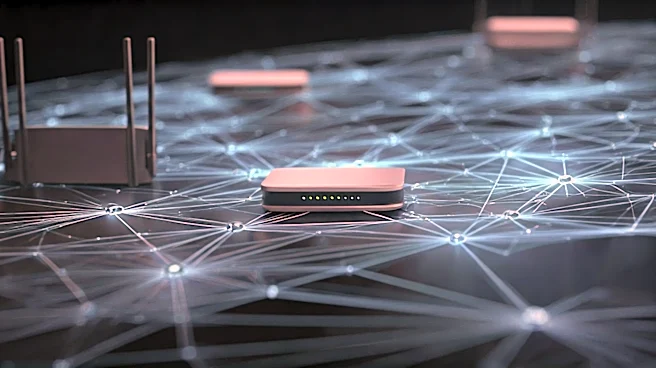
This brings us to the future: Wi-Fi 7 (802.11be). And here is the detail most self-taught pros miss by focusing on the new, higher speed numbers: the defining feature is Multi-Link Operation (MLO). This is the real game-changer. MLO allows a single device to connect to a router using multiple radio bands (like 2.4 GHz, 5 GHz, and the new 6 GHz) *at the same time*. Think of it like this: if your current Wi-Fi is a car stuck on a single highway that might have a traffic jam, MLO gives your car the ability to use three different highways simultaneously, dynamically routing packets through whichever lane is clearest at that exact moment. This isn't primarily about adding the speeds of all three bands together for one giant download—though it can do that. Its most profound impact is on latency and reliability. By having multiple paths, Wi-Fi 7 can guarantee that data arrives with near-zero interruption, even in a heavily congested area. It creates a robust, predictable connection that’s less like public Wi-Fi and more like a hardwired Ethernet cable.
Why Reliability Trumps Raw Throughput
So why does this matter? Because the future isn't about downloading a 4K movie two seconds faster. It’s about applications that simply cannot tolerate lag or dropped packets. Think of wireless VR and AR headsets, which can cause motion sickness if latency spikes. Consider competitive cloud gaming, where a 20-millisecond delay means the difference between victory and defeat. Or think of industrial robotics and remote surgery, where a dropped connection is catastrophic. For these applications, a consistently low-latency connection is infinitely more valuable than a sporadically high-speed one. The future of Wi-Fi is being engineered not for the speed-test junkie, but for a world of real-time, mission-critical wireless experiences. The new benchmark for excellence isn't just 'how fast?', but 'how stable?'. That is the paradigm shift.