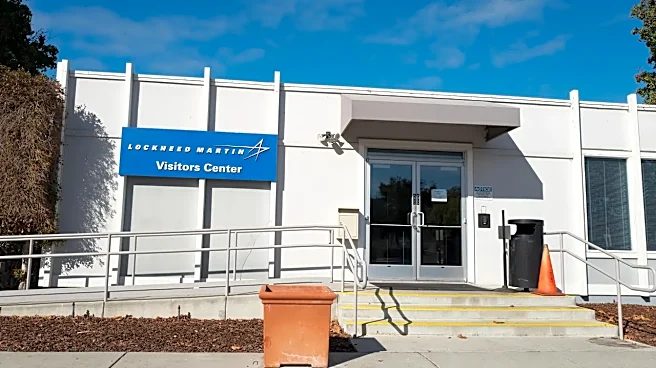









When a titan like Lockheed Martin, America’s largest government contractor, makes a major real estate move, it’s more than just a new address. It's a signal. While the official story often centers on synergy, the real reasons are far more complex.
The Decades-Long Drift to D.C.
First,
let's set the record straight. Lockheed Martin's corporate headquarters has been in the Washington, D.C. area, specifically Bethesda, Maryland, since its 1995 merger with Martin Marietta. The 'move' that often creates buzz isn't one single event, but a series of strategic consolidations away from its legacy West Coast roots toward the center of U.S. political power. Before the merger, Lockheed Corporation was headquartered in Calabasas, California. The move to Bethesda was the first and most significant step, placing the newly formed behemoth's leadership within a stone's throw of its number one customer: the Pentagon. Any subsequent moves of divisional headquarters or business units are ripples from that foundational decision.
Following the Contracts and the Talent
While the corporate leadership stays firmly planted near the halls of government, the company's operational footprint is in constant motion, chasing two things: contracts and talent. A prime example is the relocation of the Fleet Ballistic Missile (FBM) program headquarters from Sunnyvale, California, to Titusville, Florida. The official reason was to be closer to their U.S. Navy partner for the Trident missile program, which makes perfect sense. But the unofficial reasons are just as compelling. The move transitions jobs from high-cost Silicon Valley to Florida’s 'Space Coast', a region with a deep-rooted aerospace talent pool and a significantly lower cost of living. It's a classic business two-step: improve customer collaboration while optimizing labor and operational expenses.
The Great Consolidation Game
Like many legacy industrial giants, Lockheed Martin has spent decades acquiring other companies, resulting in a sprawling and sometimes redundant collection of facilities. Since the post-Cold War era, the company has been in a near-constant state of reorganization to drive efficiency. Divesting its IT services division to Leidos in 2016 was a major move to shed a lower-margin business and double down on its core—building advanced hardware. With each strategic shift comes a real estate review. Consolidating office space, shuttering older facilities, and moving business units to centralize expertise are all part of a relentless push to streamline operations and deliver value to shareholders. These aren't as dramatic as a single HQ relocation, but they have a massive impact on the company's bottom line and employee base.
The 21st Century War for Brainpower
Today's defense industry is as much about software, AI, and data analytics as it is about building jets and missiles. This has ignited a fierce war for talent against big tech. Lockheed Martin now finds itself competing with the likes of Google and Amazon for top-tier engineers, data scientists, and cybersecurity experts. This reality is forcing the company to modernize its approach to hiring and, in some cases, move to where the talent is. Recent hiring initiatives show a focus on skills-based hiring and using AI to streamline recruitment. While Bethesda is the political hub, the company knows its next breakthrough might come from a team based near a tech hub like Austin, or a research university in the Midwest. This geographic flexibility is key to building the workforce needed to develop the next generation of '21st Century Security' platforms.