
The Problem in the Palo Alto Hills
To understand the MAC address, you have to go back to the 1970s at Xerox’s legendary Palo Alto Research Center (PARC). This was the birthplace of the modern personal computer, the mouse, and the graphical
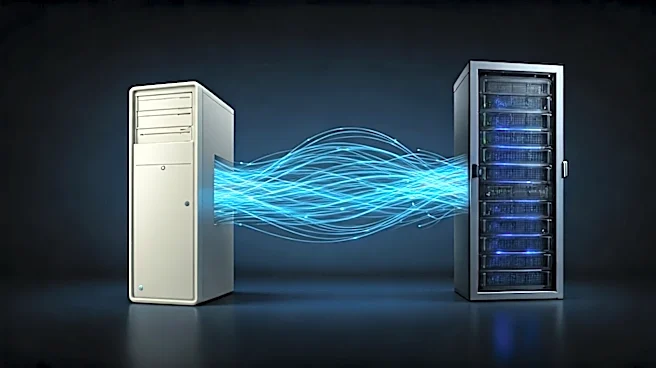
user interface. But having a building full of revolutionary computers created a new problem: how do you get them to talk to each other? How does a computer send a document to a specific printer down the hall when dozens of devices are all shouting on the same wire? This was the challenge facing engineers Robert Metcalfe and David Boggs. They needed a way for devices on a local network to identify themselves and direct traffic without a central controller managing everything. They called their solution “Ethernet.” It was a system for letting devices share a common communication line (a coaxial cable, back then), but it needed a bulletproof addressing scheme to work. The system had to be simple, cheap, and reliable.
A Digital Fingerprint from Birth
The core idea they landed on was both simple and profound: give every single network-capable device in the world a unique, permanent address that is burned into its hardware during manufacturing. This Media Access Control (MAC) address would function like a serial number or a fingerprint. It wouldn’t change, no matter what network you connected it to. It was the device’s true name. This was a fundamentally different concept from the IP address we're more familiar with today. An IP address is like your home's mailing address; it's assigned by the network you’re on and can change if you move. A MAC address, by contrast, is like your Social Security Number; it’s tied to you (the device) for life. This permanent, low-level identifier allows devices on the same local network—like your laptop, your Wi-Fi router, and your smart TV—to find and speak to each other directly before they even worry about connecting to the broader internet.
The Genius of the 48-Bit System
So, how do you guarantee every device has a unique number without creating a bureaucratic nightmare? This is where the design's true brilliance shines. The 48-bit MAC address (typically shown as 12 hexadecimal characters, like 00:1A:2B:3C:4D:5E) is split into two halves. The first 24 bits are the Organizationally Unique Identifier (OUI). This is a unique code assigned to a hardware manufacturer by a central standards body (the IEEE). For example, Apple, Dell, and Netgear each have their own OUI blocks. The manufacturer is then responsible for the second 24 bits. They use this half to assign a unique serial number to each device they produce. This creates a beautifully decentralized system. The IEEE manages a few thousand manufacturers, and each manufacturer manages its own millions of devices. The result? A system that can generate 281 trillion unique addresses without any two companies ever accidentally overlapping. It was a local solution that was ready-made for a global scale.
An Accidental Foundation for the Internet
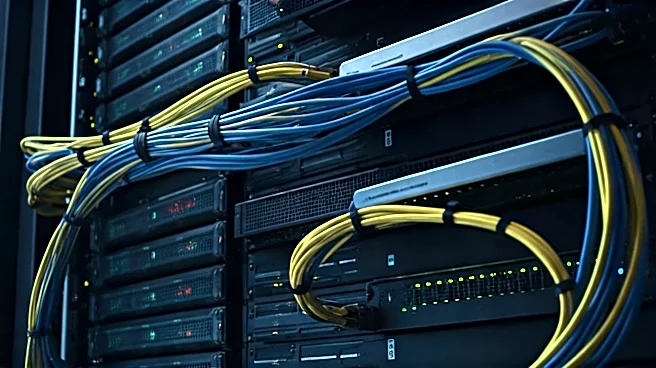
The ultimate “real reason” the MAC address was designed this way is that it was a supremely pragmatic solution to a local problem. Metcalfe and his team weren't trying to build a global internet for billions of people; they were just trying to connect a few hundred computers in one building. They needed a system that didn't require a central admin and wouldn’t break. Yet, the elegance of the OUI system and the permanence of the burned-in address made it the perfect foundation for the networking layers that came later. The internet works by layering systems on top of each other. At the very bottom, on your local Wi-Fi or wired network, MAC addresses are doing the gritty work of making sure packets go from your router to your specific laptop, not your roommate's. The fact that this 50-year-old design not only still works but remains a fundamental, untouchable part of how our digital world functions is a testament to its initial, brilliant design.