







The Reign of the Giants
For the last few years, the AI arms race has been a spectacle of scale. Tech giants have been locked in a fierce battle to build the largest, most powerful language models (LLMs), with parameter counts soaring into the hundreds of billions or even trillions.
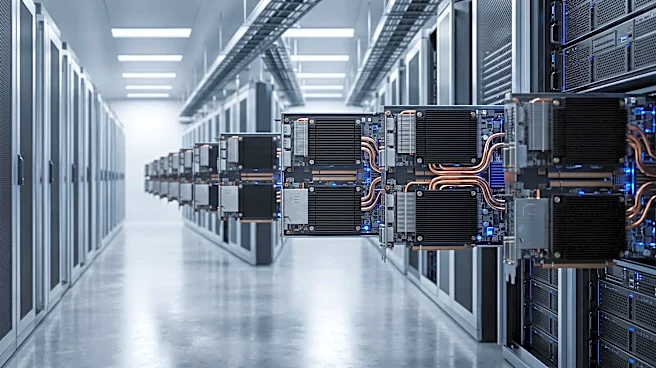
This gold rush created an unprecedented demand for specialized hardware, turning Nvidia and its GPUs into the undisputed kingmakers of the AI world. Training these colossal models requires staggering computational power, costing millions of dollars and consuming enough electricity to power small cities. The underlying assumption was simple: more data and more parameters would inevitably lead to greater intelligence. This created a high barrier to entry, leaving innovation in the hands of a few companies with the deepest pockets.
A Revolution in Efficiency
Lately, however, that 'bigger is always better' logic has started to crack. A new class of small language models (SLMs) is demonstrating that for many real-world applications, a sledgehammer isn't necessary when a scalpel will do. These aren't just shrunken-down versions of their larger siblings; they are highly optimized and often fine-tuned for specific tasks. An SLM with a few billion parameters, when trained on high-quality, domain-specific data—like medical records or legal contracts—can often outperform a general-purpose giant with 100 times the parameters. This shift redefines the goal from building the biggest possible brain to building the right tool for the job.
The Power of On-Device AI
One of the most significant advantages of smaller models is their ability to run directly on local devices like smartphones, laptops, cars, and industrial sensors. This 'on-device' or 'edge' AI is a game-changer for several reasons. First, it's incredibly fast. By processing data locally, it eliminates the lag time required to send a query to a distant cloud server and wait for a response, which is critical for real-time applications like language translation or driver-assist features. Second, it's private. Sensitive information—be it personal health data, financial details, or proprietary business information—never has to leave your device. Finally, it works offline, ensuring functionality in areas with poor or no internet connectivity.
Democratizing the Future of AI
Perhaps the most important impact of the SLM trend is its potential to democratize AI innovation. For years, the immense cost of training and running large models on Nvidia-powered supercomputers created a chasm between the tech titans and everyone else. Smaller, more efficient models are leveling the playing field. Startups, university researchers, and developers at smaller companies can now afford to experiment, fine-tune, and deploy sophisticated AI systems. This lowers the cost of inference—the process of running a trained model—by as much as 90-95%, making AI economically viable for a much wider range of products and services. Instead of a future dominated by a few monolithic AI providers, this trend fosters a more diverse, competitive, and resilient ecosystem.