






The Specialist in a World of Generalists
Think of the processor in your computer, the CPU, as a versatile handyman. It can do everything from running spreadsheets to playing videos—a true jack-of-all-trades. Then there’s the GPU, originally a specialist for graphics, which turned out to be great
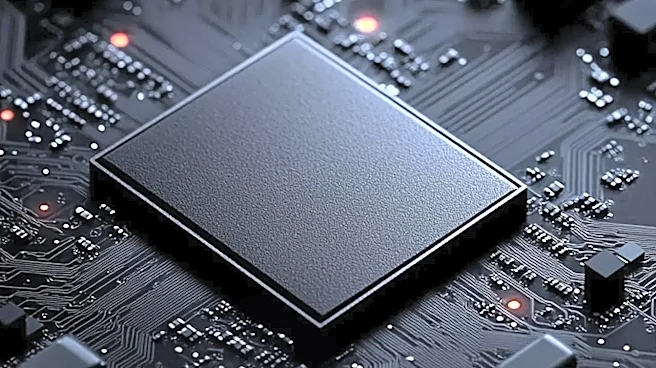
at running many calculations at once, making it the workhorse of the early AI boom. The Tensor Processing Unit, or TPU, is something different. It’s a hyper-specialist. Developed by Google starting around 2015, a TPU is an Application-Specific Integrated Circuit (ASIC) designed for one job: accelerating the mathematical operations used in artificial intelligence. It doesn't handle graphics or run your operating system. Instead, it’s built to perform the massive matrix calculations at the heart of neural networks with incredible speed and power efficiency. By stripping away the unnecessary functions of a general-purpose chip, TPUs can perform these specific AI tasks much faster and using less energy than their CPU and GPU cousins.
Hiding in Plain Sight
The claim that TPUs 'underpin most software you use' is most true within Google's own universe. These chips are the engine behind many of the company's flagship products that serve billions of users. When you use Google Search, TPUs help rank results and understand your query. When you ask Google Photos to find all the pictures from your trip to the beach, TPUs are powering the image recognition that makes it possible. They also drive the instant magic of Google Translate and the conversational abilities of Google Assistant. Google didn't just build this hardware for fun; it was a strategic necessity. The company realized that the computational demands of its AI-powered features were becoming so immense that relying on traditional hardware was unsustainable from a cost and energy perspective. TPUs were the purpose-built solution.
Powering the Broader AI Ecosystem
The influence of TPUs extends far beyond Google’s own applications. Since 2018, Google has made its powerful TPU infrastructure available to other companies through Google Cloud. This means that countless startups and established businesses are building and running their own AI features on the same specialized hardware. Whether it's a company developing a new medical diagnostic tool, a retailer creating a recommendation engine, or a tech firm building the next generative AI model, they can rent access to massive clusters of TPUs. This 'democratization' of AI hardware allows smaller players to access supercomputing power without the immense cost of building their own data centers. As a result, many of the new AI-driven tools and services emerging across the software industry are, indirectly, being powered by these specialized chips. Even major AI players like Anthropic and, reportedly, OpenAI have used Google's TPUs to train and run their massive models.
A Quiet Front in the Chip Wars
For years, the AI hardware market has been dominated by one name: NVIDIA, whose GPUs became the de facto standard for training machine learning models. Google’s development of the TPU is a direct challenge to that dominance and a key strategic move. By designing its own chips, Google gains deep control over its entire technology stack, from the hardware up to the software frameworks like TensorFlow and JAX that run on it. This tight integration allows for performance and efficiency optimizations that are difficult to achieve with off-the-shelf hardware. It also reduces Google's dependence on a single external supplier. While GPUs remain more flexible for a wider variety of tasks, TPUs often deliver better performance-per-watt on large-scale AI training and inference, a critical metric as AI models grow ever larger and more power-hungry. This hardware specialization represents a major front in the silent, high-stakes arms race to build the foundation of the AI future.