









The AI Gold Rush Has One Simple Rule
In today's tech landscape, the dominant business strategy for artificial intelligence is straightforward: build a cutting-edge large language model (LLM), keep its inner workings a closely guarded secret, and sell access to it. Companies like OpenAI,
Google, and Anthropic have invested billions to create powerful models such as the GPT series and Gemini. They monetize this investment by charging developers a fee every time they 'call' the model through an application programming interface, or API. This pay-per-use or subscription-based model treats the AI as a premium, proprietary product, creating a direct and lucrative revenue stream. For most of Silicon Valley, this is the accepted playbook for capitalizing on the AI boom: control the technology, control the price.
Meta's Plan: Give Away the Shovels
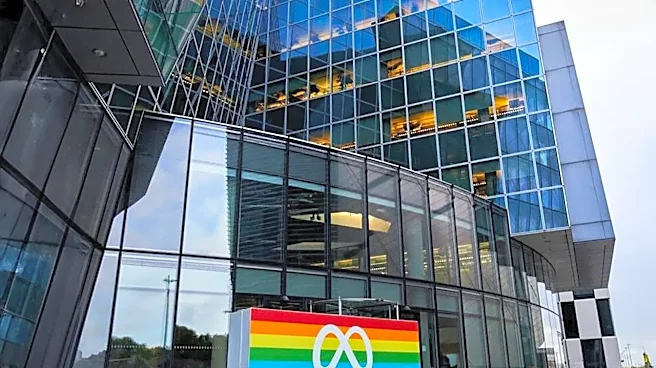
Meta has decided to tear up that playbook. Instead of charging for its powerful Llama series of models, the company is giving them away. By releasing the models as 'open source' (or more accurately, 'open weight'), Meta allows developers, researchers, and even commercial enterprises to download, modify, and use its technology for free, up to a certain scale. This move is the strategic equivalent of giving away free, high-quality shovels during a gold rush. While competitors are focused on selling their tools, Meta is blanketing the landscape with its own, hoping to become the default foundation for whatever gets built next. It's a stark contrast to the closed, paywalled approach of its biggest rivals.
But Why Do It for Free?
Forgoing billions in potential API fees seems counterintuitive, but it's a calculated long-term strategy. The primary goal is to commoditize the layer of the tech stack where its competitors make their money. If a powerful, free alternative exists, it becomes much harder for companies like OpenAI to justify their high prices, putting pressure on their entire business model. Secondly, this approach fosters a massive, global ecosystem of developers building on Meta's technology. Think of Google's Android versus Apple's iOS; by making Android open, Google achieved dominant market share. Meta hopes to do the same for AI, creating an army of developers who are familiar with and reliant on its tools. This widespread use also provides invaluable feedback and data, creating a rapid improvement cycle for future Llama models that a closed system can't easily replicate.
A Calculated Gamble or a Masterstroke?
Meta's strategy is not without risks. By open_sourcing its models, the company loses direct control over how the technology is used and forgoes a straightforward revenue stream. Competitors could even potentially use Meta's open models as a foundation to build their own rival products with less investment. However, the potential reward is immense. Meta isn't in the business of selling AI models; it's in the business of selling ads and, it hopes, future platforms like the metaverse. By ensuring the foundational AI layer remains open and free, Meta prevents a competitor from becoming a gatekeeper that could one day tax or block its own products, like Facebook, Instagram, and WhatsApp. The bet is that the true value isn't in selling the AI itself, but in owning the ecosystem that flourishes on top of it. It's a move to ensure its own relevance and to monopolize profits at a different level of the stack.