








5. The Color-Coding System Actually Matters
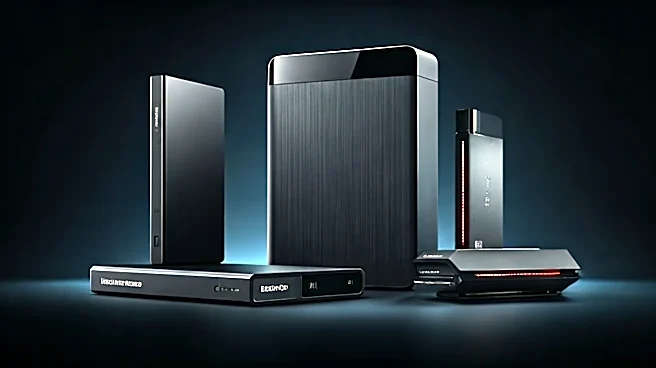
To a newcomer, the rainbow of Western Digital drives—Blue, Green, Black, Red, Purple, and Gold—can look like a confusing marketing gimmick. The first surprise is that it’s one of the most practical user-facing systems in the tech industry. Each color
corresponds to a specific use case. WD Blue drives are your all-around workhorses for general desktop use. WD Black is engineered for high performance, targeting gamers and creative professionals who need top-tier speed. This clarity prevents users from making common mistakes, like putting a standard desktop drive into a 24/7 network-attached storage (NAS) system. Instead of forcing you to decipher dense technical spec sheets, WD gives you an immediate visual cue about a drive’s intended purpose. For anyone building their first PC, it’s a welcome and surprising bit of hand-holding that saves both time and potential headaches.
4. Their Gaming Drives Are a True Ecosystem
It’s easy to be cynical about “gaming” hardware. Often, it just means faster specs and some flashy lights. While WD_BLACK drives are certainly fast—especially their NVMe SSDs, which deliver blistering load times—the real surprise is the software. The WD_BLACK Dashboard is a dedicated control center that provides more than just health monitoring. Its standout feature is a “Gaming Mode” that disables low-power states, ensuring the drive is always running at peak performance for maximum responsiveness during intense gameplay. It feels like flipping a nitro switch for your storage. For gamers who obsess over every millisecond of input lag and load time, discovering that their drive has a dedicated performance-tuning suite is an unexpected and powerful perk.
3. They Make Drives Specifically for Security Cameras
Here’s something most people never consider: a hard drive running in a home security DVR has a completely different job than one in a PC. A desktop drive spends most of its time reading data (loading apps, opening files), with occasional writes (saving a document). A surveillance drive, however, is writing new video footage 24/7, a grueling and constant workload. This is where the WD Purple line comes in. These drives are engineered specifically for the high-stress, always-on environment of video surveillance. They feature firmware, like AllFrame technology, that reduces frame loss and improves video playback. For first-time users setting up a home security system, the discovery that a specialized drive even exists—let alone one designed to handle dozens of simultaneous camera streams without breaking a sweat—is a genuine revelation.
2. You Can Build a Personal Cloud Without Being a Nerd
The idea of a “personal cloud” is appealing—all your files, accessible from anywhere, without paying monthly fees to Google or Apple. But the traditional solution, a Network-Attached Storage (NAS) box, can be intimidating to set up. Western Digital’s My Cloud Home devices are a surprising bridge for the non-technical user. These are essentially plug-and-play NAS systems. You connect it to your router, install an app on your phone, and you’re done. You can automatically back up photos from your phone and access documents from your laptop on the go. While tech enthusiasts might prefer the raw power and customizability of a Synology or QNAP NAS, the My Cloud series offers an astonishingly simple on-ramp for regular users who just want their data back in their own hands.
1. Professional-Grade Tech Is in Their Consumer Drives
At the top of WD's hierarchy are its Gold drives, built for the extreme demands of data centers. They’re designed for insane reliability, with massive workloads and vibration protection for when they’re stacked by the dozen in server racks. The biggest surprise for prosumers and small business owners is how much of that enterprise-level engineering trickles down into the WD Red Pro line, which is aimed at high-end NAS users. Red Pro drives include features you wouldn't find in a standard desktop drive, such as 3D Active Balance Plus technology to mitigate vibration and error recovery controls that prevent drives from dropping out of RAID arrays. When you buy a Red Pro, you’re not just getting a bigger, faster drive; you’re getting a piece of hardware that shares DNA with the tech that powers corporate servers. For first-time NAS builders, this infusion of enterprise-grade reliability into a consumer-facing product is the most valuable surprise of all.