







For years, WordPress has powered a massive portion of the internet by being reliably complex. Now, its future is being reimagined around radical simplicity. But this user-friendly revolution hides a deeper, more complicated truth.
The Simple Promise: Full Site Editing
The public face of WordPress's
future is all about ease of use. The grand project, known as Full Site Editing (FSE), aims to turn the entire experience of building a website into a visual, drag-and-drop process. Instead of wrestling with separate menus for headers, footers, and widgets, FSE treats every part of your site as a 'block' that you can see and edit in one place. The goal is to empower a regular user—a small business owner, a blogger, a marketer—to create a unique, professional-looking website without ever needing to write a line of code or hire a developer. This shift away from a content-focused editor to a full website builder is the most significant change in the platform's history, promising a 'what you see is what you get' experience for everything.
Gutenberg: The Engine of Change
The engine driving this new era is the Block Editor, codenamed 'Gutenberg'. Introduced in 2018, it replaced the classic single-field editor (which resembled a word processor) with a modular system. Every piece of content, from a paragraph to an image gallery or a video embed, is its own self-contained block. This block-based architecture is the foundation not just for posts and pages, but for the entire site layout under FSE. For users, this means a more intuitive and flexible way to build pages. For WordPress, it represents a fundamental pivot toward a more modern, structured, and visually-oriented platform, designed to compete with the likes of Squarespace and Wix.
The Hidden Complexity: A New World for Developers
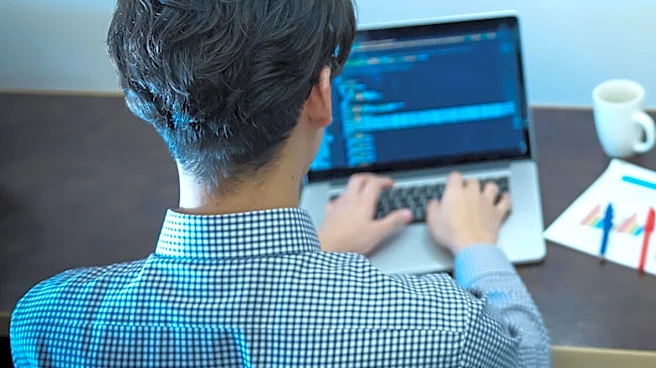
Here's the twist: making WordPress simpler for users has made it significantly more complex for many of the developers who build themes and plugins. The classic WordPress development world was built on PHP and a fairly predictable template structure. The new block-based ecosystem, however, is heavily reliant on modern JavaScript, particularly the library React. This introduces a steeper learning curve for a large part of the existing developer community. Building a custom block is not a simple task; it requires a completely different skillset involving Node.js, command-line tools, and an understanding of component-based architecture. This shift has effectively split the development world into 'classic' and 'block' paradigms.
Why This Technical Shift Matters
This isn't just a technical debate for developers; it has realworld consequences. The power of WordPress has always been its vast ecosystem of themes and plugins. As the core of WordPress modernizes, developers must adapt or risk their products becoming obsolete. While classic themes still work, the future is clearly with blockbased themes that are faster, more secure, and integrate seamlessly with Full Site Editing. This transition can be challenging, as converting a classic theme to a block theme isn't a simple copypaste job; it requires a complete architectural rethink. The result is a more powerful but also more fragmented ecosystem, where the technical barrier to entry for creating deep customizations has, in many ways, been raised.