



The AI World's Universal Translator
Think of a vector embedding as a way to translate messy, human-centric data—like text, images, or even the molecular structure of a chemical—into a universal language that computers can understand: numbers. It takes an object, like the word "dog," and turns
it into a list of numbers, or a "vector." This isn't random; the numbers represent the object's essential qualities and its relationship to other things. In this numerical space, items with similar meanings end up close to each other. So, the vector for "puppy" will be mathematically close to "dog," while the vector for "skyscraper" will be very far away. This simple concept of representing similarity through distance is what makes embeddings so powerful.
It's Not a Crystal Ball, It's a Map
When we say embeddings "predict" things, it's not because they can see the future. It’s because they create an incredibly detailed map of existing data. By understanding the relationships, nuances, and contexts within massive datasets, they can make highly educated guesses. For example, by analyzing the vectors of thousands of successful drug compounds and their targets, an AI can predict which new, untested molecules have a similar structure and are therefore more likely to be effective. It’s a prediction based on recognizing patterns at a scale no human ever could, turning a guessing game into a targeted search.
Smarter Shopping, Better Binging
The most visible impact over the next decade will be in hyper-personalization. The recommendation engines on streaming services and e-commerce sites already use embeddings to suggest what you might want to watch or buy next. But this will get far more sophisticated. Instead of just recommending movies in the same genre, future systems will understand the vibe. They'll connect a movie's pacing, its color palette, the style of dialogue, and your viewing history to suggest something you'll love, even if it's in a completely different category. This moves beyond simple keyword matching to a conceptual understanding of content.
The Next Frontiers: Science and Industry
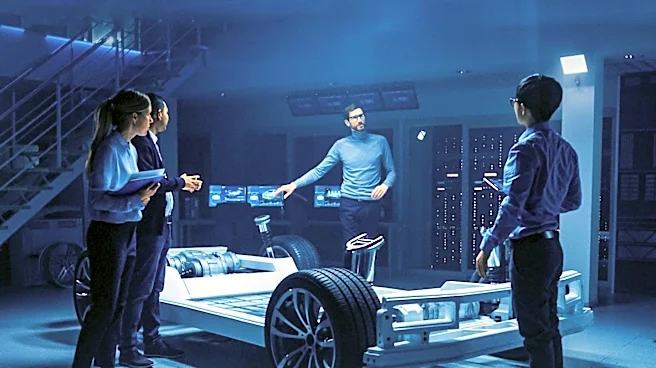
Beyond entertainment, the predictive power of embeddings will reshape science and heavy industry. In medicine, researchers are using embeddings to represent proteins and molecules, drastically speeding up drug discovery by identifying promising candidates computationally. In manufacturing, embeddings can represent sensor data from machinery, allowing systems to predict component failures before they happen. By translating the physical world into a semantic vector space, AI can identify subtle patterns that precede major events, from a faulty jet engine to a potential new material with desirable properties.
The All-Too-Human Limitations
For all their power, embeddings have significant weaknesses. They are only as good as the data they are trained on. If the data contains biases, the embeddings will inherit and amplify them. Furthermore, they don't truly "understand" concepts; they only map statistical relationships. A model might know the vectors for "doctor" and "nurse" are close, but it has no real-world comprehension of what those jobs entail. This means they can make strange, nonsensical errors or fail on queries that require logical reasoning beyond simple similarity. They are a tool for pattern recognition, not genuine cognition.