









Surprise 1: Aggressive Looks Don't Equal Ergonomic Support
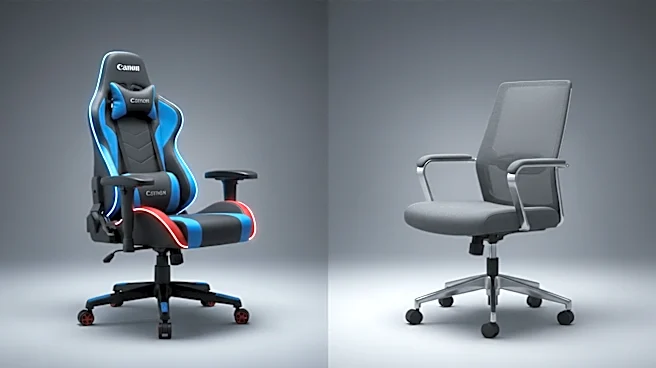
The first thing that grabs you about a gaming chair is its style, often inspired by the bucket seats in race cars. They feature high backs, winged sides, and bold colors designed for an immersive gaming atmosphere. This aesthetic suggests top-tier performance,
but the design philosophy is fundamentally different from that of an ergonomic office chair. While a race car seat is built to hold a driver in place against G-forces, your desk doesn't pull multiple Gs. In reality, those pronounced side bolsters can restrict your movement and even push your shoulders forward into a slouch. A good office chair, by contrast, is designed based on health science. Its S-shaped backrest mirrors your spine's natural curve, and its more open design encourages the micro-movements that are crucial for preventing stiffness during long work sessions.
Surprise 2: That 'Lumbar Pillow' Isn't What You Think
Many gaming chairs come with a detached lumbar pillow, which seems like a thoughtful ergonomic bonus. The surprise for many users is how ineffective it can be. These pillows often push your lower back too far forward, fail to stay in place, and tend to flatten out after just 30 minutes of use, losing their supportive quality. In contrast, a well-designed office chair features integrated, adjustable lumbar support. This isn't just a pillow; it's a mechanism built into the chair's backrest that you can often adjust for height and depth to perfectly match the curve of your lower back. This built-in approach provides consistent, targeted support that doesn't shift or compress, which is a major factor in preventing back pain during an eight-hour workday.
Surprise 3: 'Adjustability' Means Different Things
Both chair types boast about being adjustable, but they focus on different things. Gaming chairs are famous for their deep recline functions, with many leaning back 180 degrees for napping between sessions. While dramatic, this feature has limited practical use for anyone trying to stay productive at a desk. Ergonomic office chairs prioritize a different kind of adjustability focused on tasking posture. They use synchro-tilt mechanisms, where the seat and back recline at different ratios to keep you in an ergonomically sound position. Furthermore, high-quality office chairs offer a wider range of micro-adjustments that gaming chairs often lack, such as seat depth adjustment (sliding the seat pan forward or back), back height, and precisely tunable armrests. These features are less flashy but far more critical for customizing the chair's fit to your specific body, which prevents long-term strain.
Surprise 4: You're Paying for Style Over Substance
A common assumption is that a higher price tag equals a better chair. However, with gaming chairs, a significant portion of the cost is often dedicated to aesthetics, branding, and features like extreme recline rather than core ergonomic quality or durable materials. A similarly priced ergonomic office chair will almost always provide better long-term value in terms of build quality and functional support. Office chairs are frequently built to meet rigorous industry standards for durability, like BIFMA testing, which involves thousands of cycles of stress tests. This means they are engineered for a longer functional lifespan, sometimes lasting 5 to 10 years or more, whereas many gaming chairs may only last 2 to 4 years before the cushioning flattens and materials degrade.