





So, What Is a Vision Transformer?
Think of it this way: for years, computer vision models, called Convolutional Neural Networks (CNNs), looked at images like someone examining a mosaic tile by tile. They were great at recognizing local patterns—edges, textures, shapes—and building them
up to identify an object. A Vision Transformer (ViT) takes a different approach. Inspired by the AI that powers large language models like GPT, a ViT breaks an image into a grid of patches and looks at all of them at once. Instead of seeing tiles, it sees the whole mosaic, allowing it to understand the relationships between different parts of the image from the get-go. This is the difference between identifying a whisker and understanding it’s part of a cat lounging on a faraway sofa.
Prediction 1: Autonomous Systems Will Get Smarter
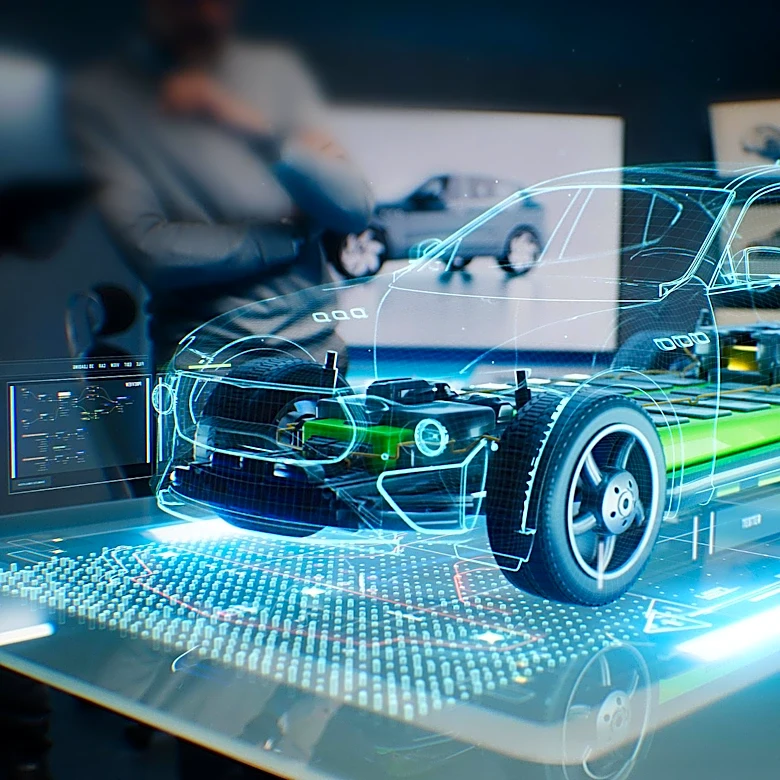
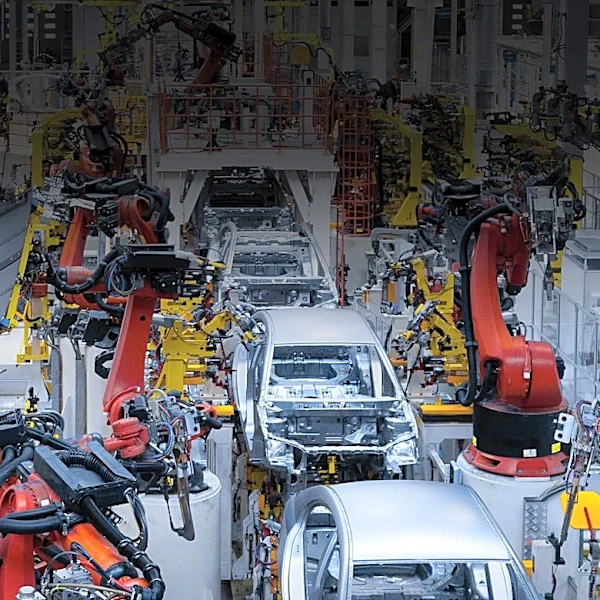
The single biggest leap for ViTs will be in autonomy. Today’s self-driving cars, drones, and factory robots rely heavily on CNNs, which are good but have limitations. They can struggle to understand the full context of a busy street or a cluttered warehouse. Because ViTs grasp the global context of a scene, they are better equipped to handle complex environments. An autonomous vehicle using ViTs won’t just see a ball, a child, and a car as separate objects; it will understand the relationship between them and predict that the child might run after the ball into the street. This contextual awareness is crucial for making the split-second decisions needed for safe and reliable navigation in the unpredictable real world.
Prediction 2: Healthcare Diagnostics Will See the Unseen
In medicine, the ability to see the bigger picture is transformative. ViTs are already being used to analyze high-resolution medical scans like MRIs and pathology slides. While a CNN might be trained to spot a specific type of anomaly, a ViT can correlate subtle changes across a wide area of a scan. For example, in cancer detection, it can identify how minor textural differences in tissue relate to broader structural changes across an entire slide, potentially flagging early-stage malignancies that might otherwise be missed. Over the next decade, expect ViT-powered diagnostic tools to become a standard second opinion for radiologists and pathologists, leading to earlier and more accurate diagnoses.
Prediction 3: Retail and Entertainment Will Become Hyper-Personalized
The way you shop and consume media is also set to change. In retail, ViTs will power far more sophisticated visual search tools. You’ll be able to take a picture of a chair in a magazine and not only find that exact chair but also get recommendations for entire room layouts that match its style. For entertainment, ViTs will revolutionize content moderation and creation. They can analyze video frames to understand complex scenes, actions, and even emotions, leading to better automated content tagging and summarization. This same technology will also be used in generating visual effects and creating hyper-realistic digital assets for movies and games.
The Reality Check: Hurdles to Overcome
Despite the promise, ViTs are not a magic bullet. Their biggest weakness is that they are incredibly data-hungry. Unlike CNNs, which have some built-in assumptions about how images work, ViTs must learn everything from scratch, which requires massive datasets and significant computing power. This makes them expensive to train and deploy. Research is ongoing to make them more data-efficient, but for now, their high cost is a barrier to widespread adoption, especially for smaller companies. Furthermore, they can sometimes struggle with tasks that require recognizing fine-grained details or precise spatial structure, like counting objects accurately.